In the pitch-black room, six men stepped forward, each holding a small candle whose flame barely touched the darkness. They gathered around a huge creature, trying to understand what stood before them. One held his candle to the trunk and said it was a snake, another lit up a leg and said it was a pillar, another raised the flicker toward an ear and said it was a fan. The candles trembled in their hands as their voices clashed, each man defending what his light revealed. Yet none of their flames were strong enough to show the whole. In the center, the great elephant stood silently, its vast shape lost in shadow, waiting for a light bright enough to make them see.
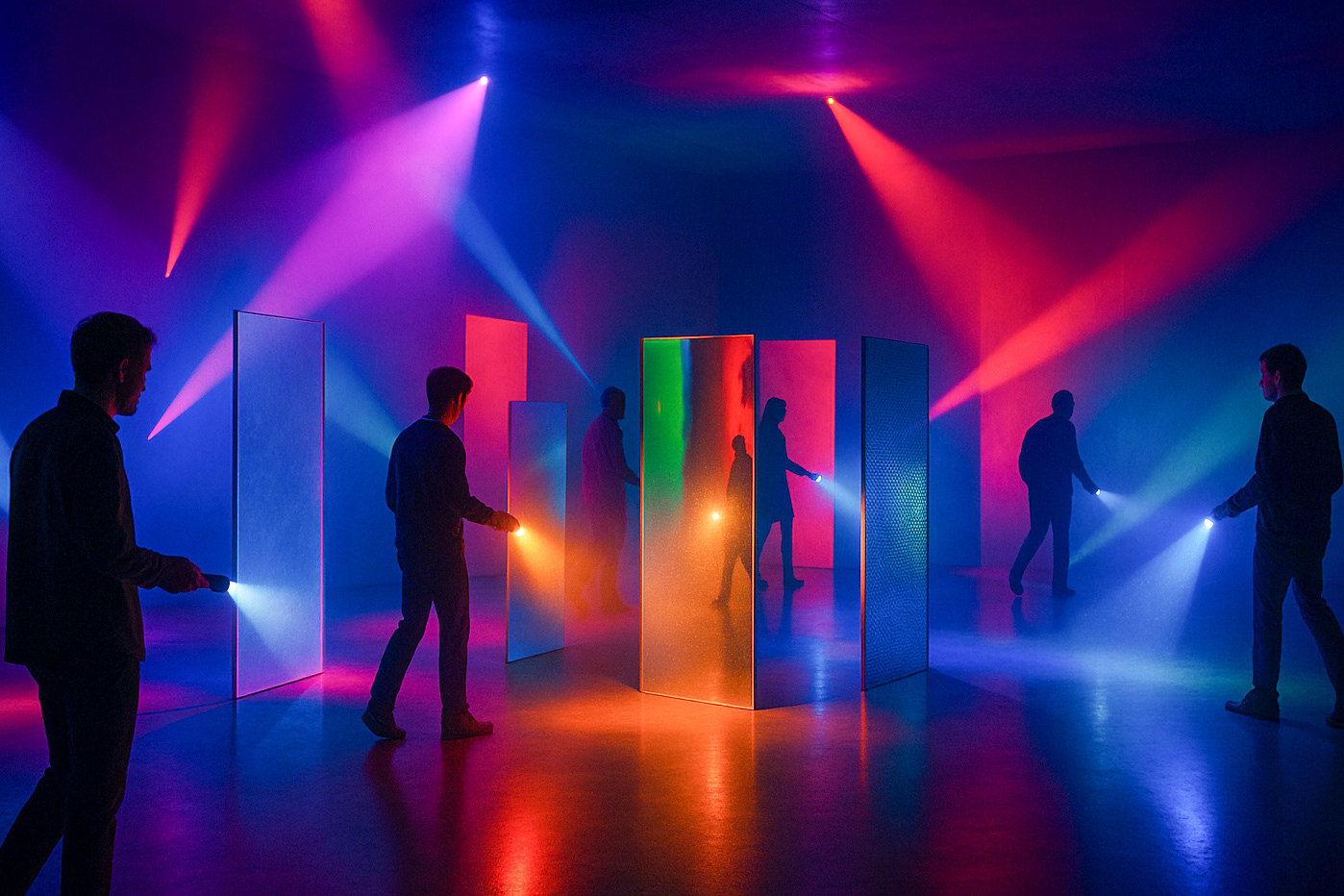
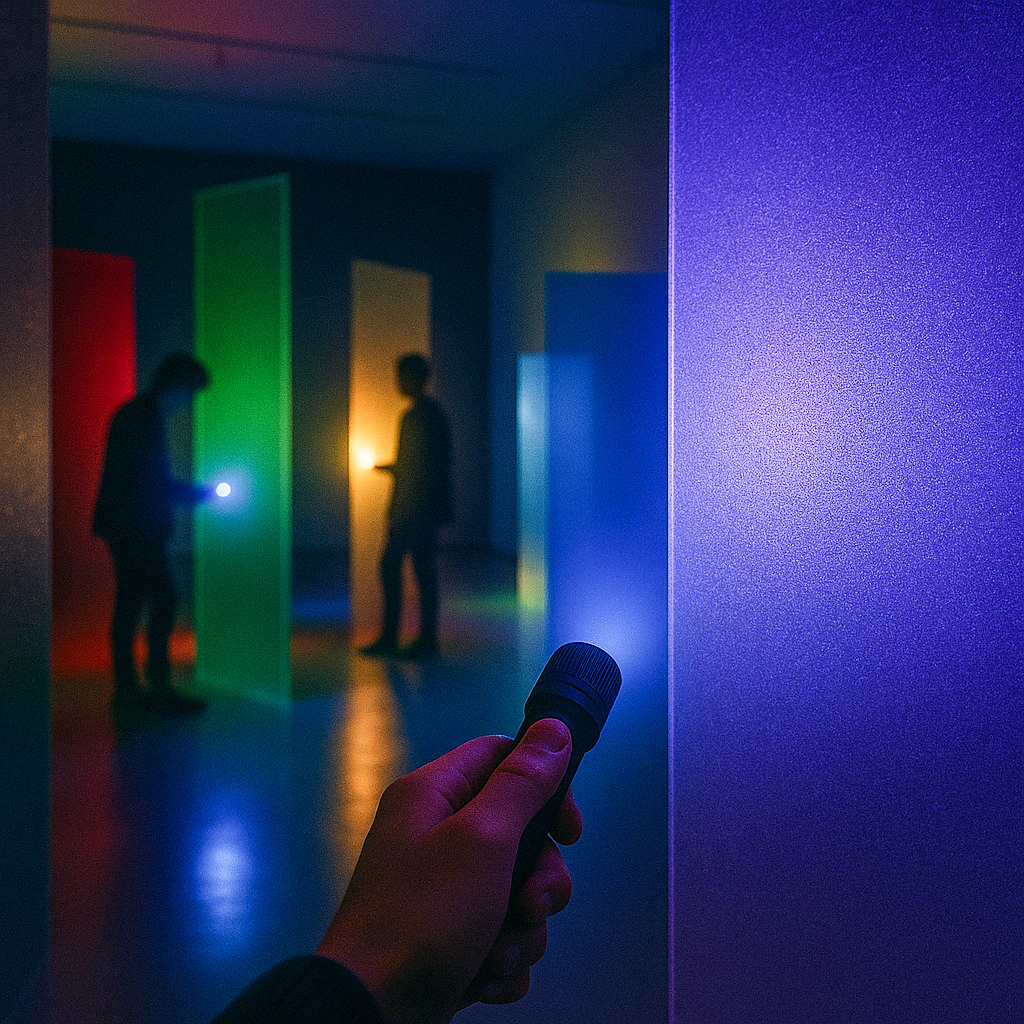
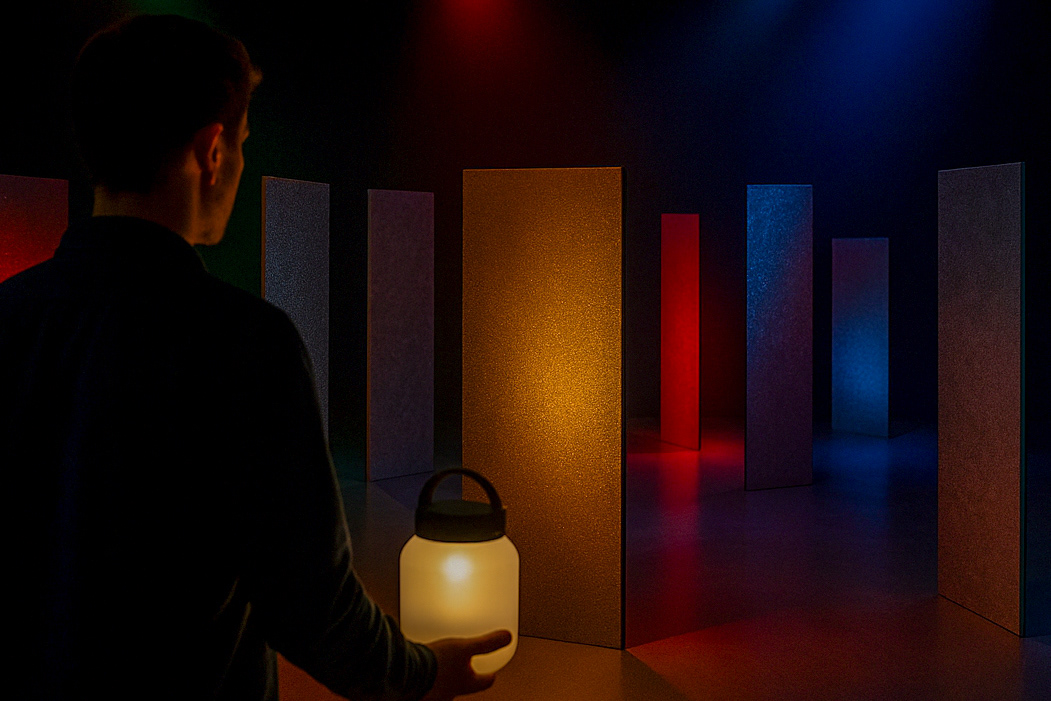
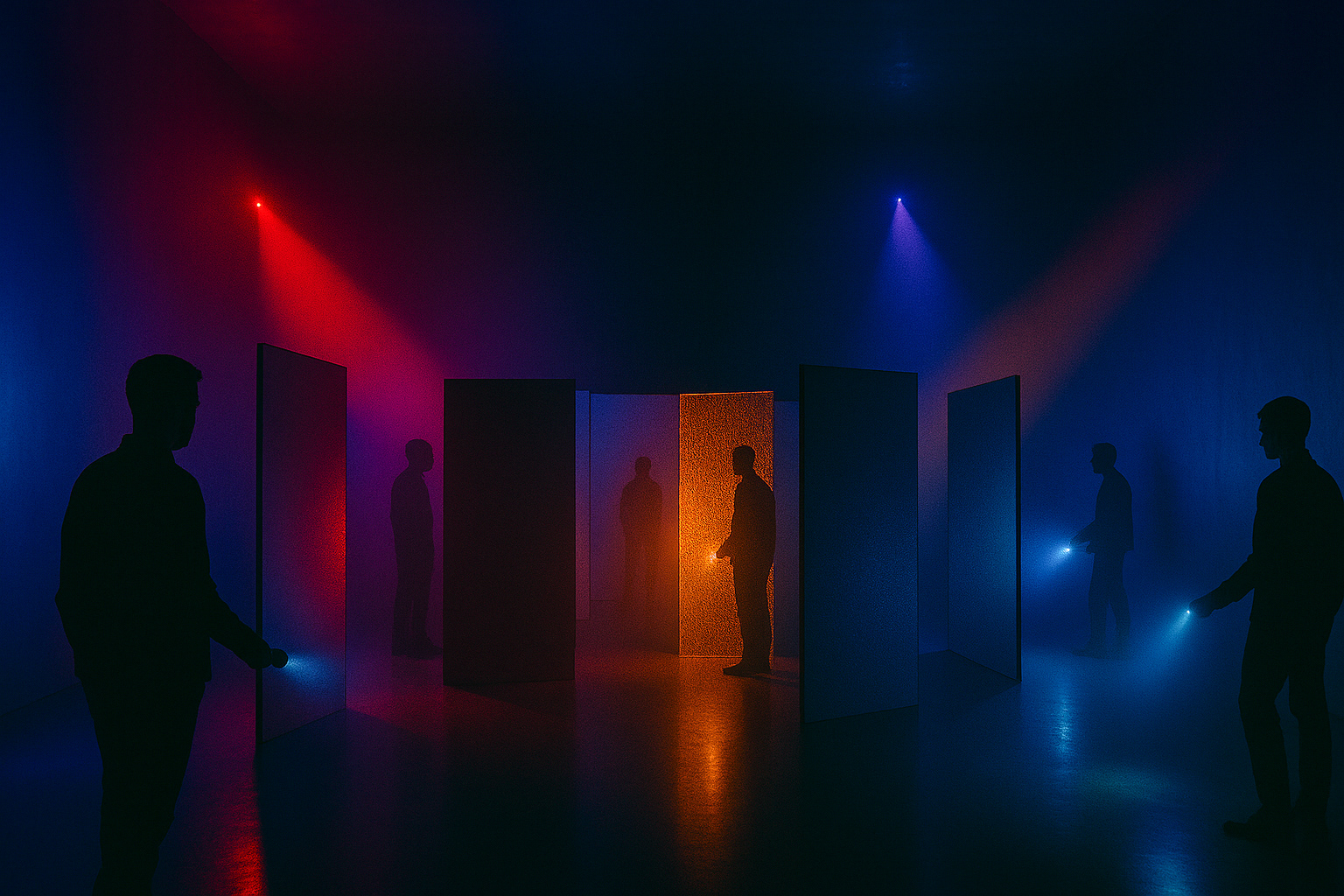
The project, The Elephant in the Dark, takes that idea into physical space. It is an installation where visitors enter a dark room and move through it with their own light source. As they walk, sensors respond to their movements, revealing only parts of what surrounds them. No one can see the whole scene at once; each person experiences a different fragment of the same story. The space becomes a reflection of Rumi’s poem, where light, perception, and movement come together to explore how truth depends on where we stand and what we choose to see.
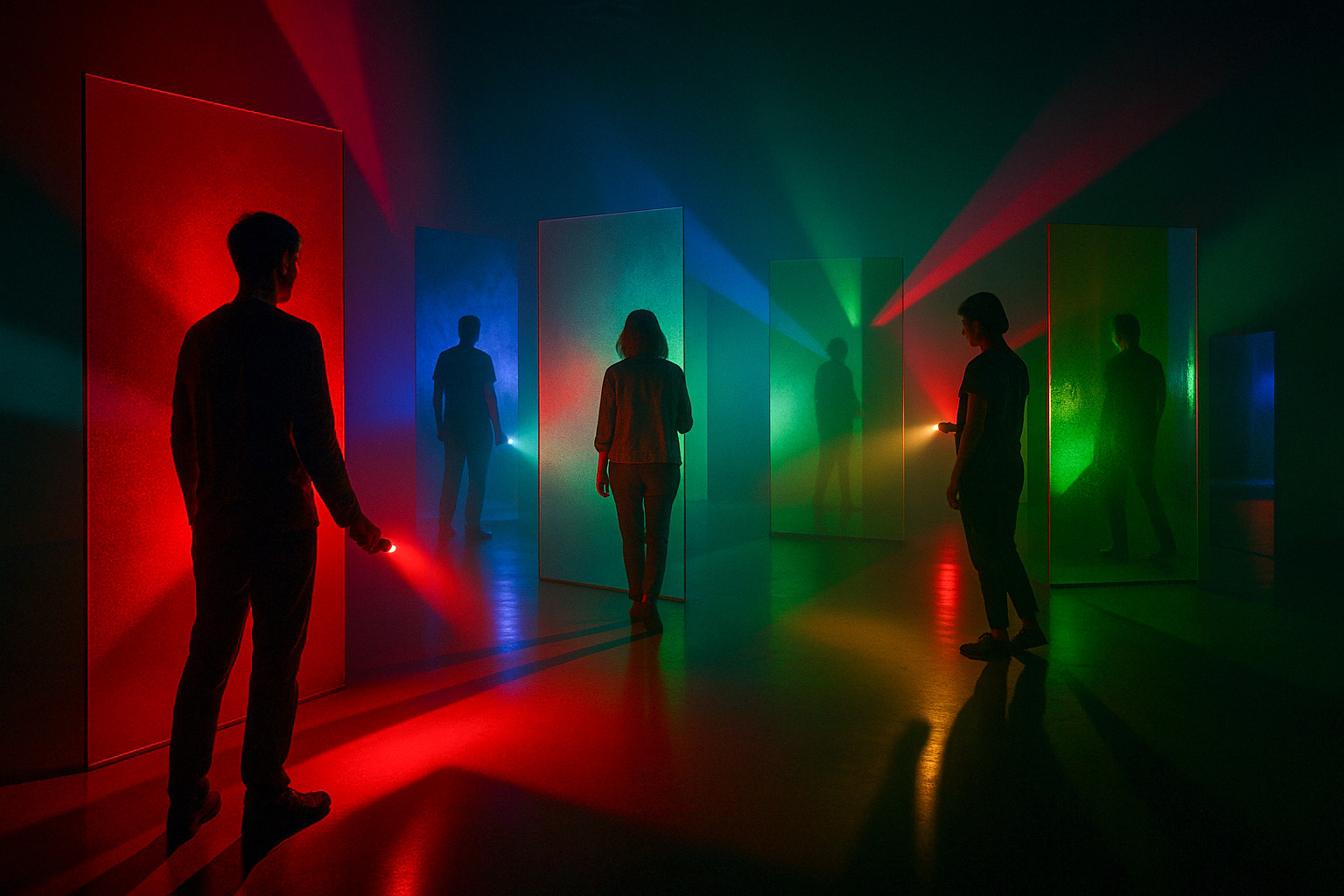
As visitors move through the space, they encounter different perspectives and feelings. Each step changes what they see and how they feel, making the experience personal and unique for everyone.
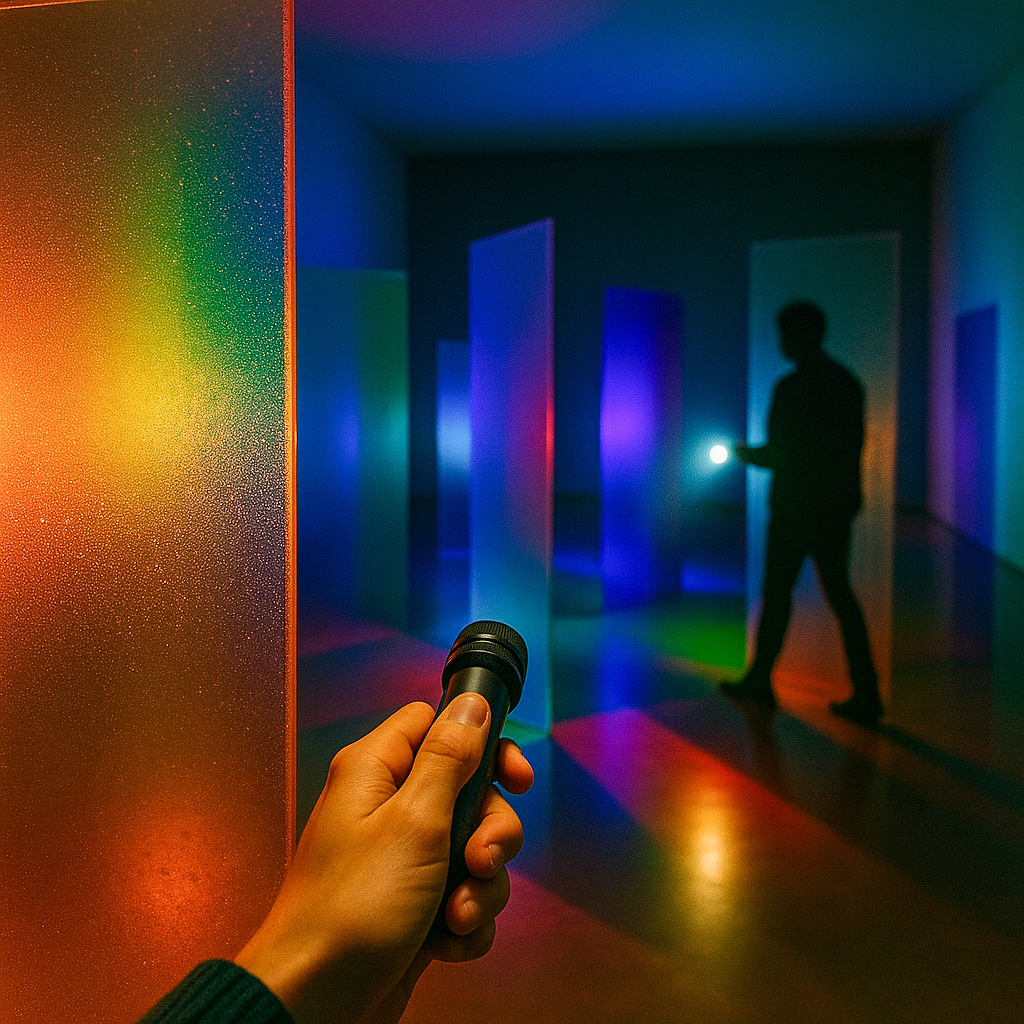
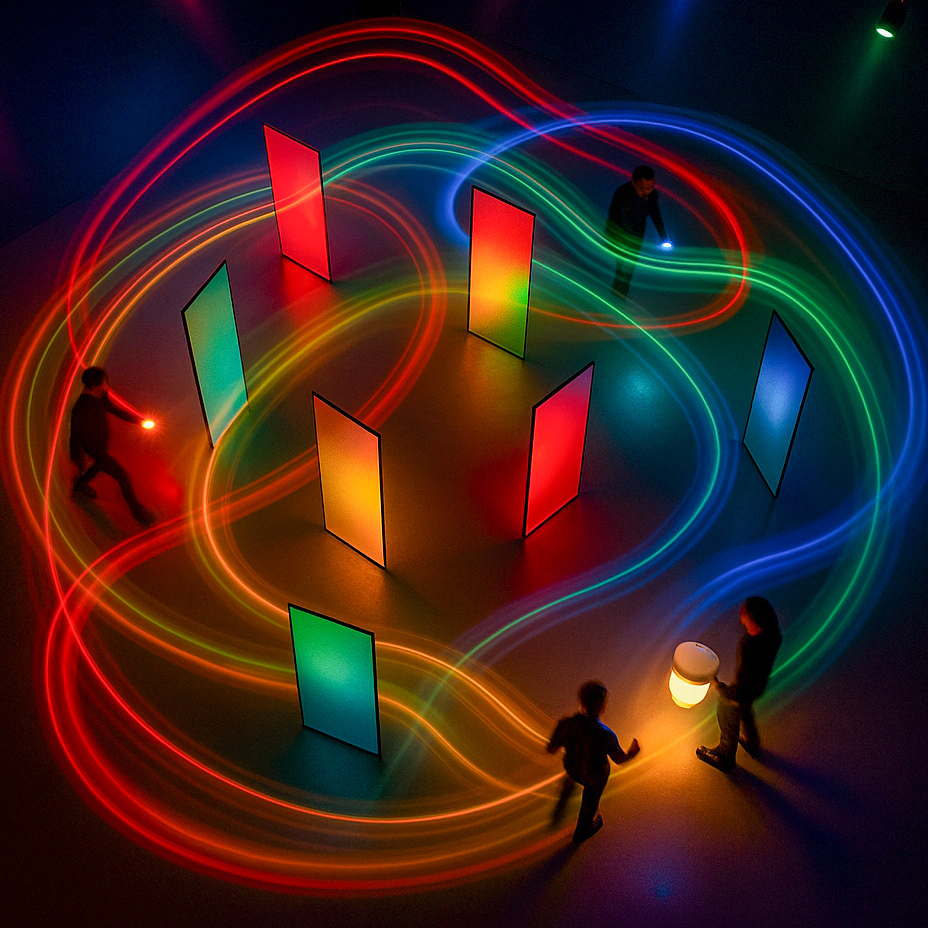
A long exposure camera captures the trails of light as visitors move, freezing their paths over time. This makes the space itself—the shifting lights and movements—the true “elephant in the dark,” visible only through the accumulated traces of interaction.
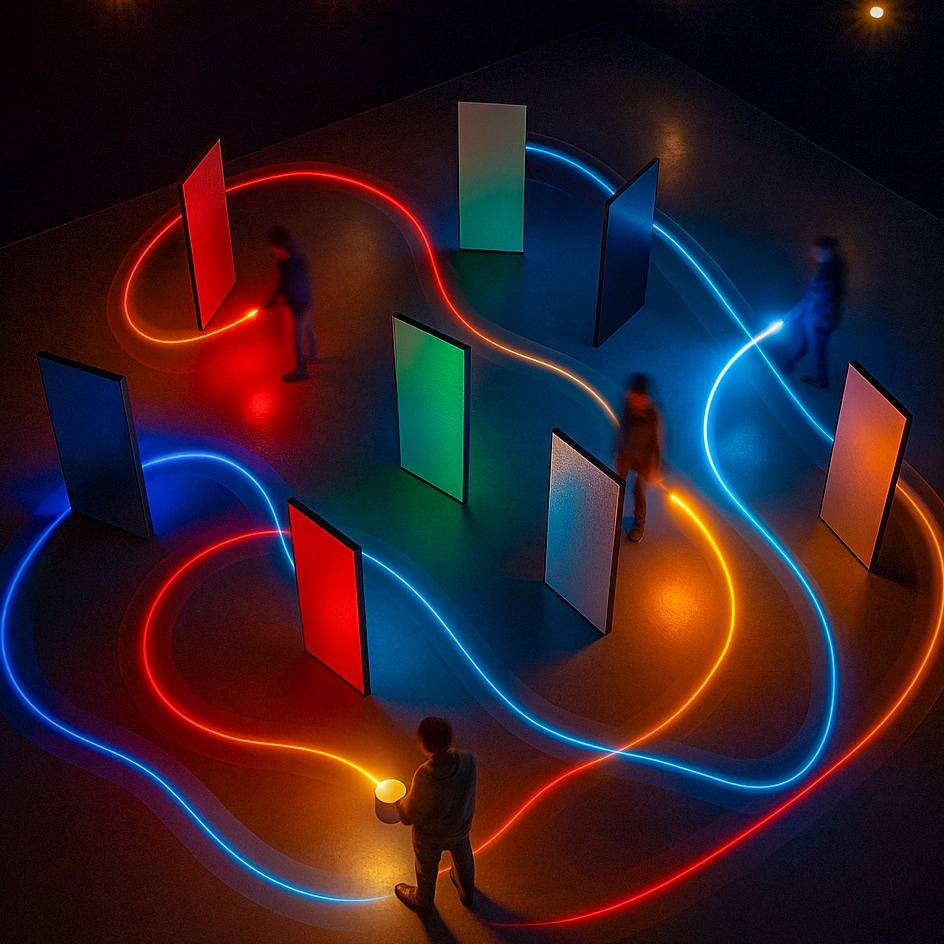

Visitor journey
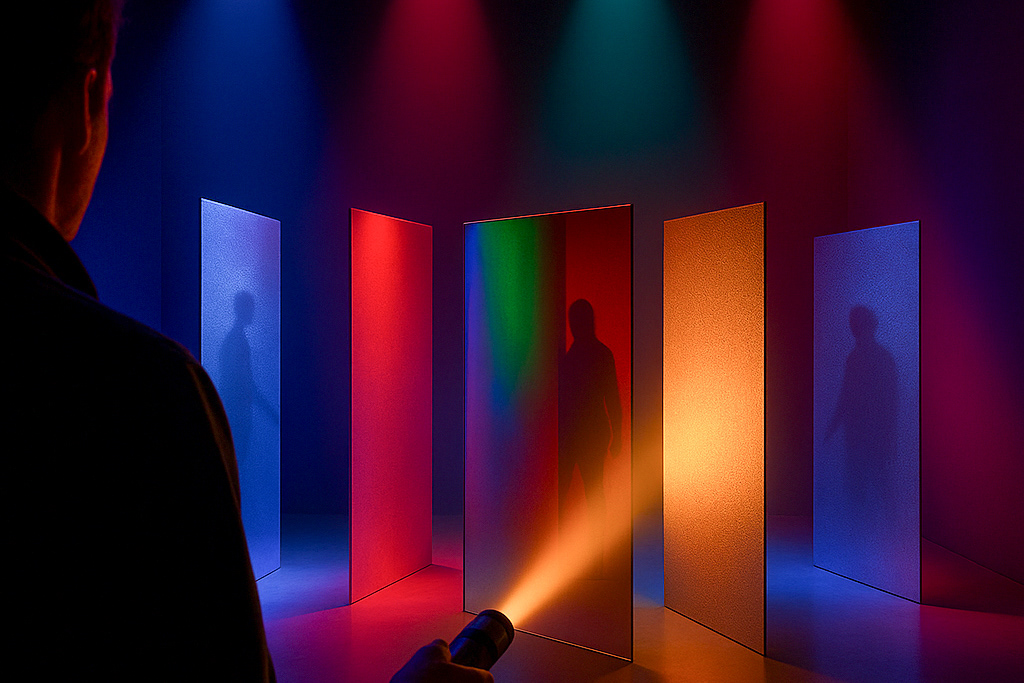
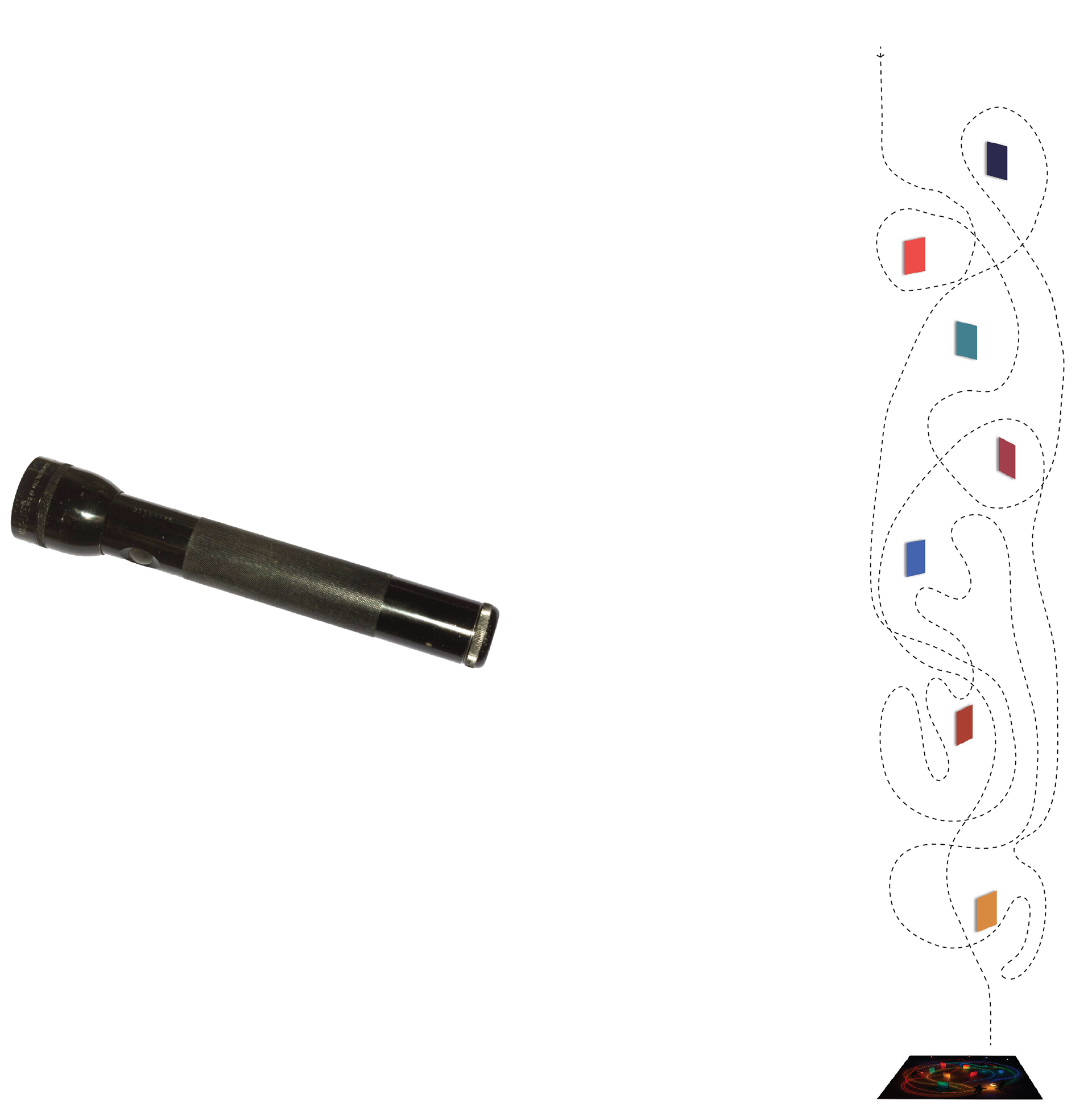
Albert, a 68-year-old retired truck driver from Austria, has spent years driving at night, becoming deeply aware of light and its moods. Curious and open, he enters the darkened installation with his old, dimmable flashlight. At first, he stands still, taking in the scattered panels, then slowly walks through the space, noticing how the light shifts with his movements and those of others. Outside, he sees a large, abstract image and realizes it is a long-exposure photograph capturing everyone’s movement in the room. Fascinated, he buys a copy, leaving with both the print and new mental images shaped by the experience.
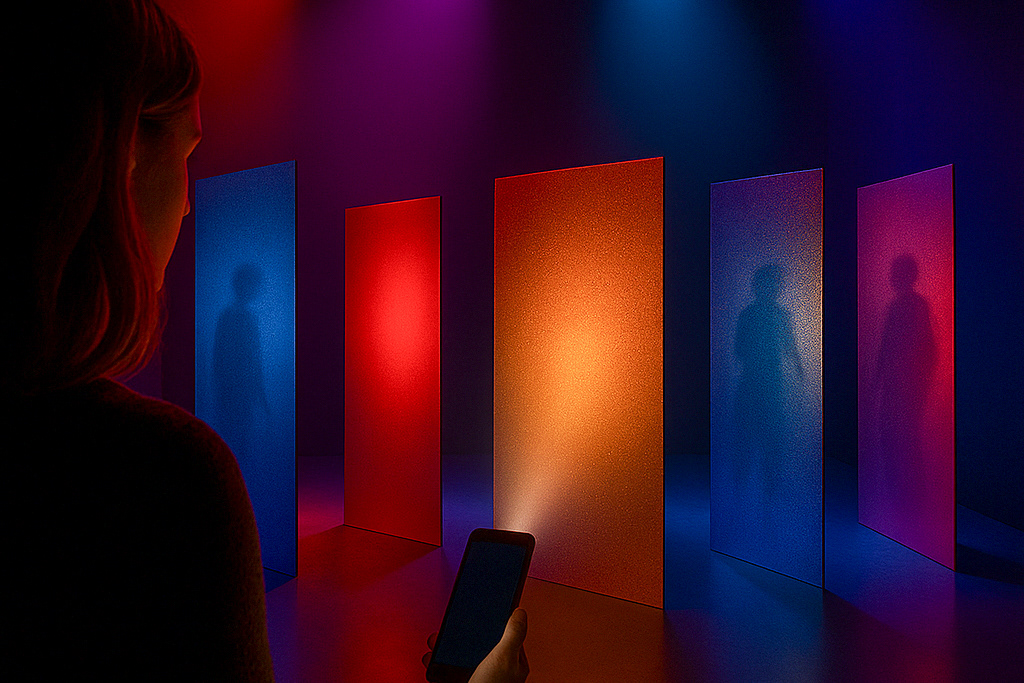
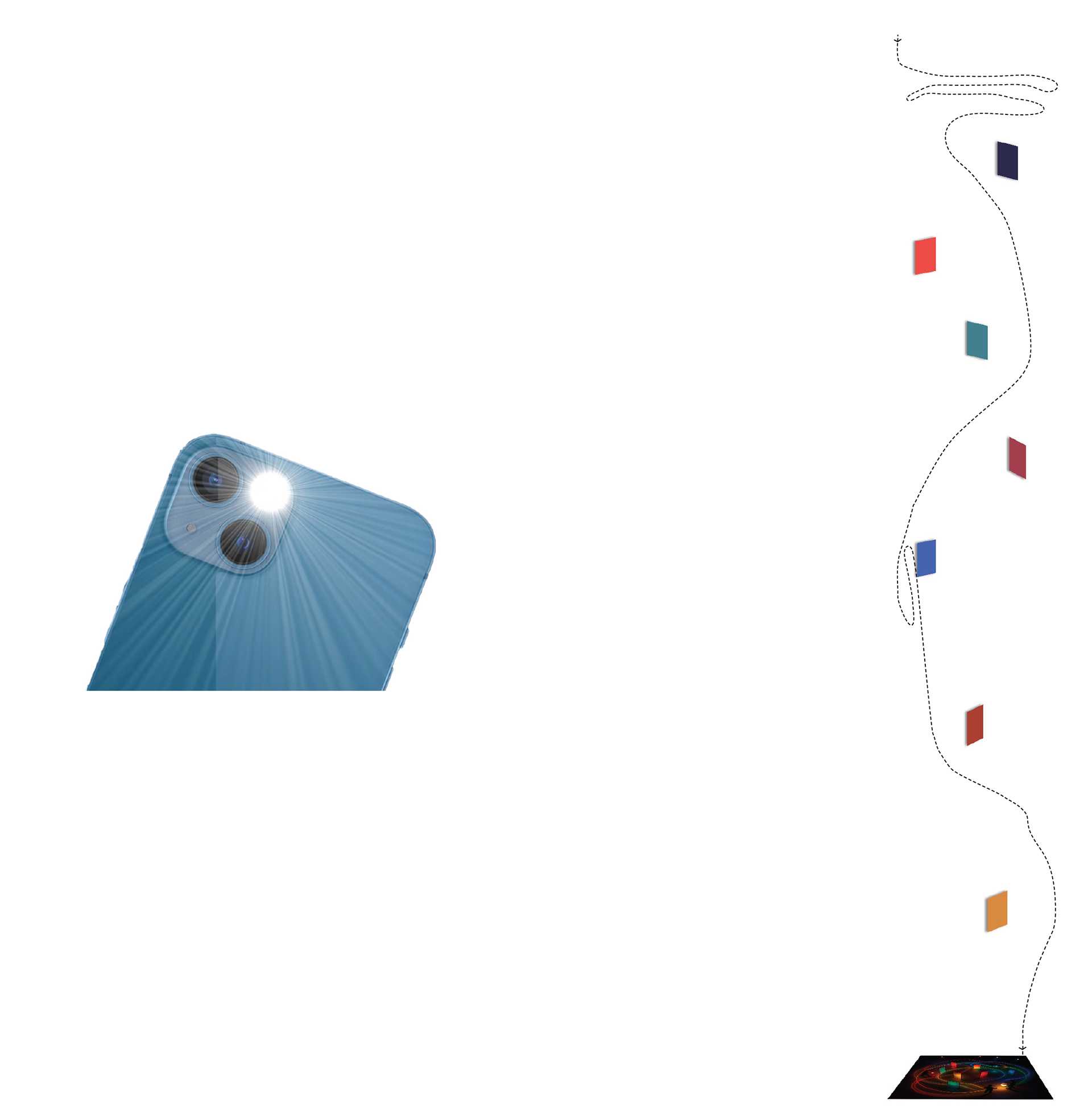
Sarah, a 25-year-old medical student, visits the exhibition on a date and uses her phone flashlight, unprepared for the experience. The darkness and shifting lights catch her off guard, and she moves cautiously, mostly following her date rather than exploring on her own. The unpredictability makes her uneasy, and she stays mostly in one spot. Leaving the room before him, she sees the long-exposure photograph, noticing bright clusters but not realizing they reflect her own position. When her date explains how their movements shaped the image, she listens politely, yet the exhibition feels more like a social moment than a personal discovery.
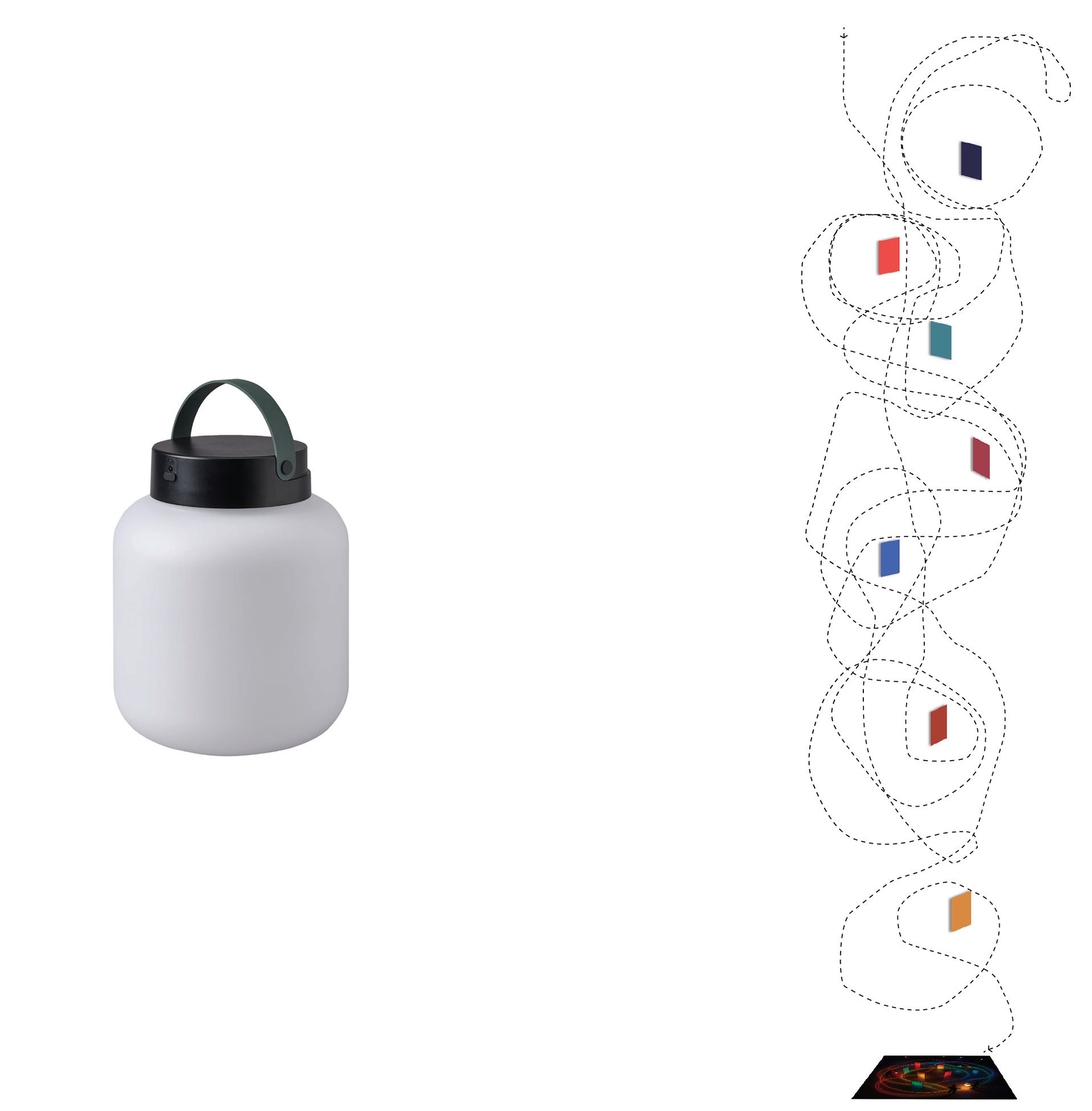
Emmanuel, a 28-year-old student from Nigeria new to Graz, brings a small portable IKEA lamp with warm white light. Open and curious, he enters the installation with friends and heads straight to the middle, surprised to discover that visitors themselves create the light experience. He moves slowly at first, then more deliberately, experimenting with how his and his friends’ movements affect the space. Though they uncover some sensor patterns, the full system remains a mystery. Outside, he sees the long-exposure photograph, realizing it captures the room through all the light trails they created. Fascinated, he buys a copy, reflecting on how each visitor’s “elephant” is unique even in the same space.
Why Them?
I chose Albert, Sarah, and Emmanuel because each represents a distinct way of engaging with the installation. Albert, with his lifetime of experience observing light on the road, approaches the space thoughtfully and patiently, noticing subtle changes and reflecting deeply. Sarah, visiting as part of a date, experiences the installation socially and cautiously, showing how context and mindset shape perception. Emmanuel, new to the city and eager to explore, approaches with curiosity and experimentation, highlighting the playful and collaborative possibilities of the work. Together, they illustrate the diversity of perspectives and experiences that the installation invites.
From Concept to build
Spatial Layout
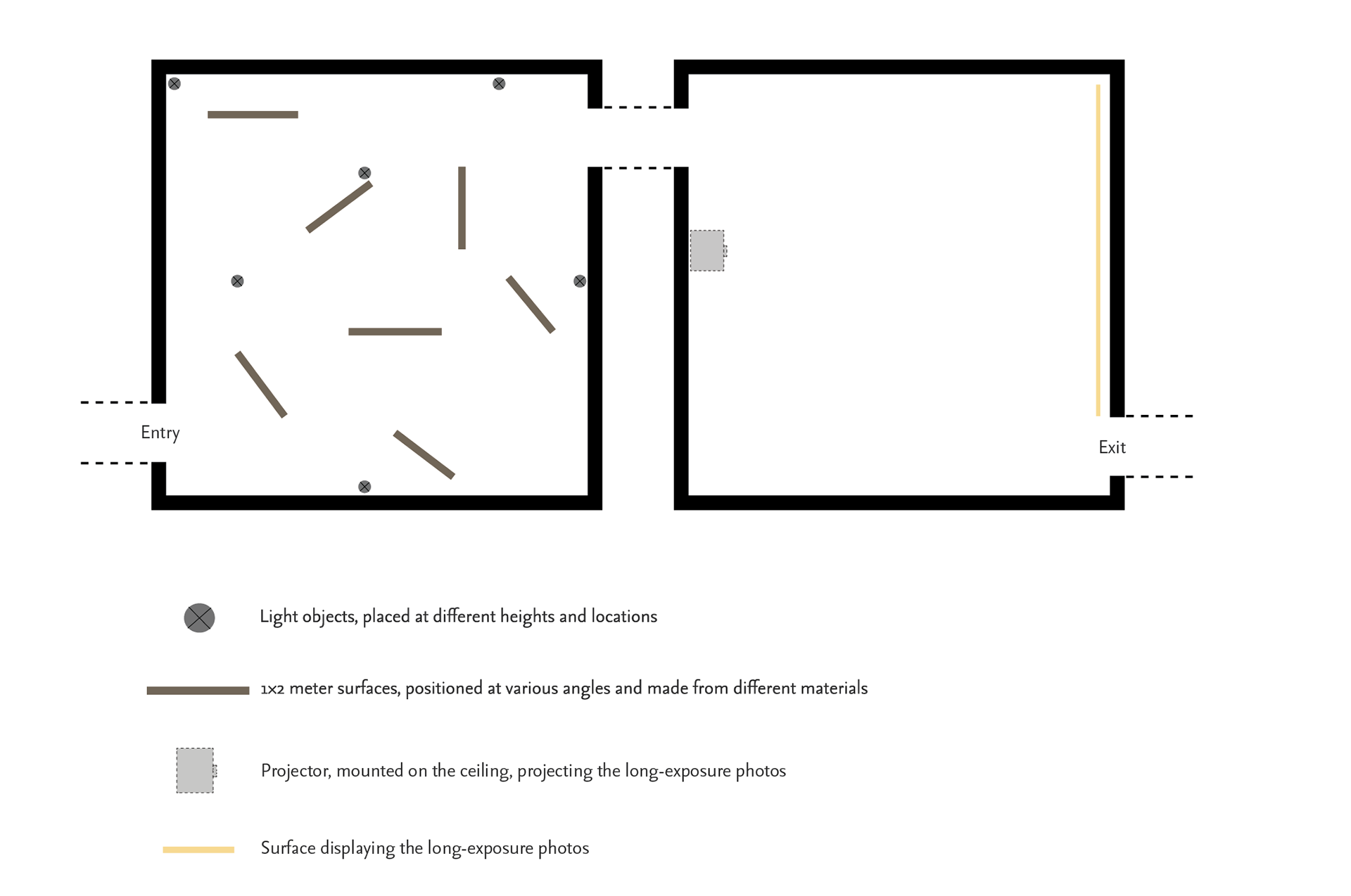
The installation is designed to be flexible, expandable, and adaptable to different locations. It requires at least a 5 by 5 meter space, a ceiling height of 3 meters, and ceiling mounts, but it can easily be scaled up for larger venues. The setup includes two parts: the core light installation, where visitors explore the darkened room with their own light sources, and the recording system. A long-exposure camera on the ceiling captures their movements, and the resulting image is projected onto a wall, revealing the collective “elephant in the room” formed through shared interaction.
Material and Surfaces
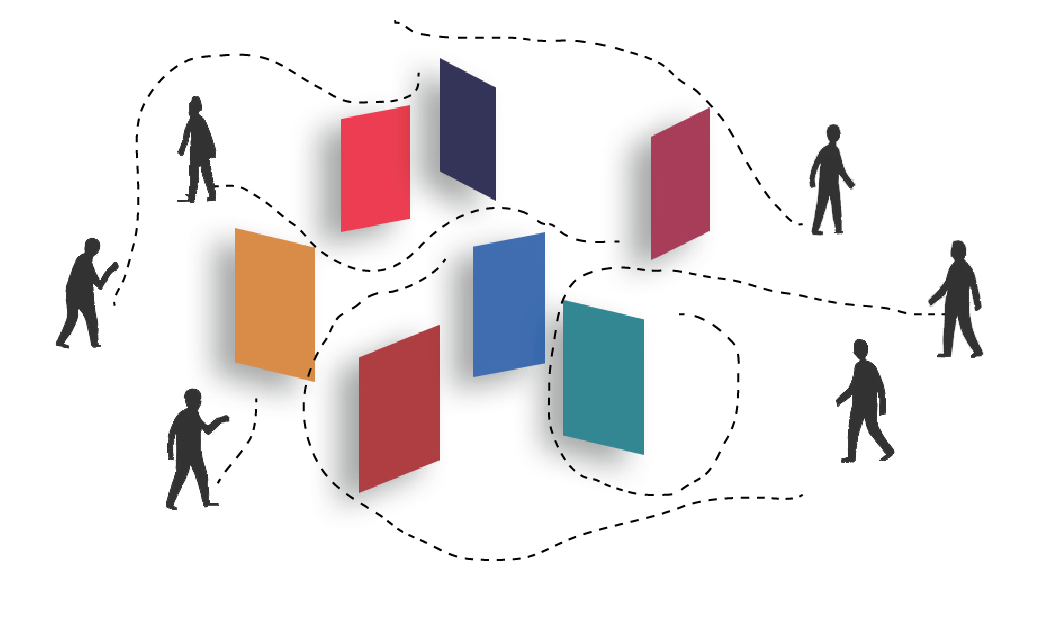
The installation features a series of panels made from diverse materials, each chosen for how it interacts with light. Reflective surfaces like polished metal or mirrored acrylic send light back toward the viewer, while absorbing materials such as black velvet or matte paint deepen the shadows. Transparent elements like glass allow light to pass through, and translucent ones like frosted glass or thin fabric diffuse it softly. Textured materials such as rippled plastic or rough stone break light into complex patterns, while glossy finishes like lacquered wood add a gentle shine. Matte materials, including chalk paint or untreated wood, spread light evenly and reduce glare. Together, these surfaces create a rich, varied play of reflections, shadows, and tones that invite exploration and perception.
Panel Construction and Mounting
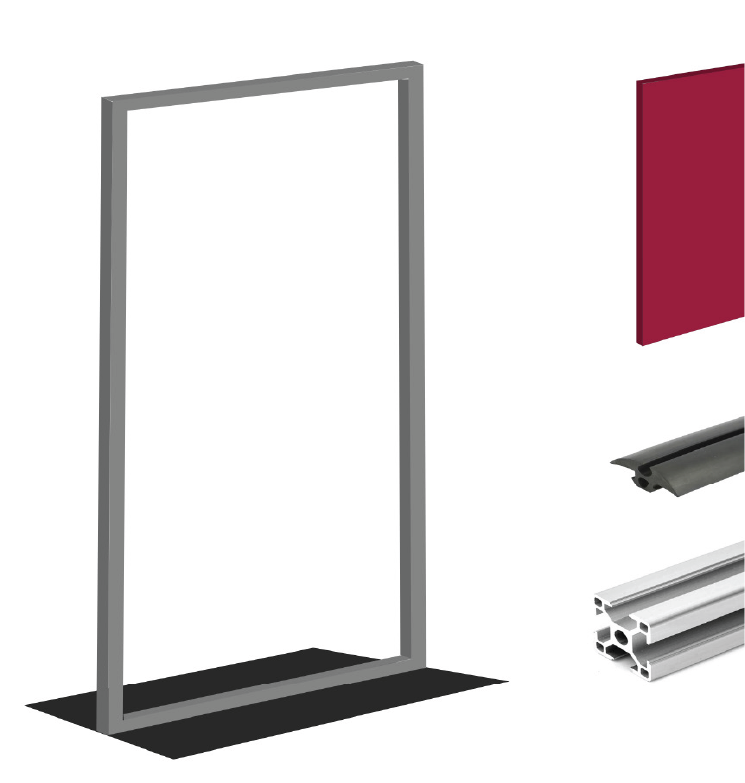
The upright panels at the core of the installation are built from lightweight aluminum profiles, making them easy to transport and assemble. Each panel features a slot system that allows material sheets to slide in and out, enabling customization of surfaces without altering the frame. Rubber seals hold the sheets securely, preventing light leakage and ensuring clean transitions between materials. Panels are anchored in low, stable floor bases that are flat and wide to prevent tripping, while the walking area is covered with heavy-duty anti-slip rubber matting. This flooring keeps panels and visitors stable, unifies the space, dampens footsteps, and helps maintain a quiet, immersive atmosphere.
Lighting and Sensor System
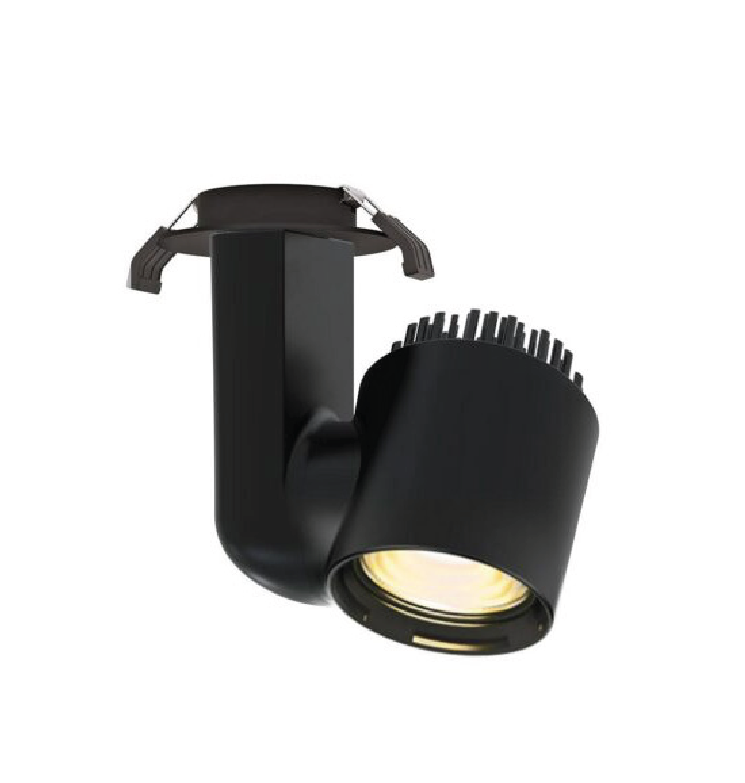
The installation’s lighting system is designed to make the space reactive, not tied to a fixed narrative. Adjustable LED fixtures are mounted on the ceiling and in corners, typically one per two square meters, with each light responding differently to movement. Motion is detected through programmable infrared sensors, dividing the room into zones where specific lights are triggered by visitor presence. Some lights shift color temperature, others change direction or intensity, and some simply turn on or off, creating unpredictable interactions that encourage exploration. This reactive approach treats light as an active, communicative agent, ensuring each encounter is unique and unrepeatable, and reinforcing the installation’s focus on personal perception and engagement.
Long-Exposure Camera Setup
A long-exposure camera mounted discreetly on the ceiling records the movement of light within the installation from a full top-down view. Capturing 15-minute exposures, it layers the light trails of multiple visitors, creating images that represent collective presence rather than individual action. Hidden within the dark ceiling, the camera remains unnoticed, ensuring that documentation does not disrupt the experience. At the end of the exhibition, these images are displayed as visual traces of shared exploration, drawings made of movement and light that transform each visitor’s personal journey into a collective memory.
Construction Feasibility and Safety
The modular design of The Elephant in the Dark makes it adaptable and scalable. A compact prototype can be built with support from local sponsors, art institutions, or university programs for temporary pilot phases, while the full version with interactive lighting, motion-triggered responses, and varied material panels requires broader financial and technical backing. This includes collaboration with experts in programmable lighting systems such as DMX or Arduino setups, as well as suppliers of high-quality motion sensors and fixtures. The motion sensors must be precisely configured to create the desired interactivity, making a technician essential for smooth operation.
The installation does not meet barrier-free standards and should clearly communicate this, as visitors with sensory sensitivities or reduced visibility may feel disoriented. Green-lit emergency exit signs provide orientation, and the floor is covered with heavy-duty, non-slip rubber matting. All panel frames are secured with flat, low-profile bases to prevent tripping, while the lightweight aluminum construction ensures both safety and flexibility. Air circulation is also considered, as visitors spend time exploring the space at a slow pace.
The Elephant in the Dark invites viewers to experience storytelling through light, movement, and perception. Rooted in Rumi’s poem, the project transforms the idea of limited understanding into a spatial experience where every visitor shapes their own version of truth. By combining responsive lighting, diverse materials, and long-exposure photography, the installation turns individual exploration into a collective visual memory. It bridges art, technology, and philosophy, showing how meaning emerges not from explanation, but from presence, curiosity, and interaction.