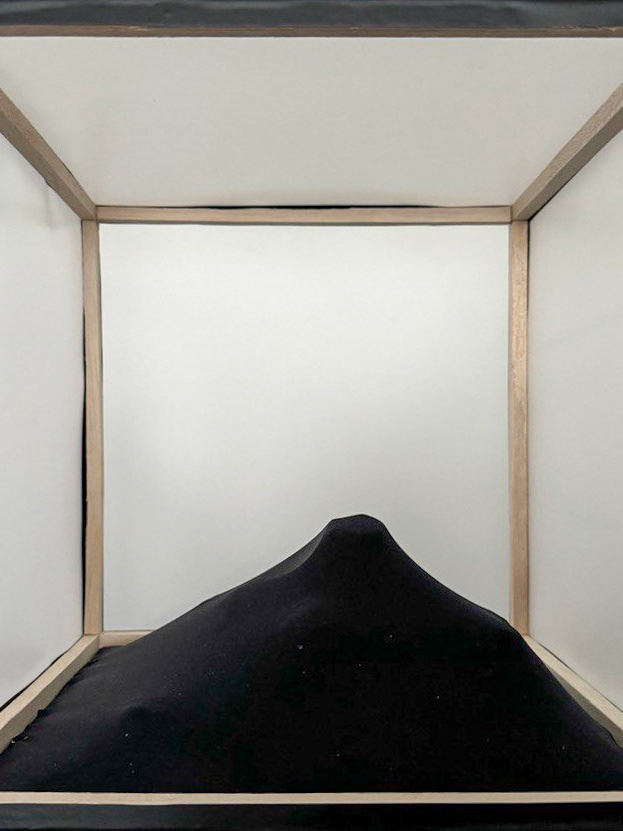
I wanted to know if light could tell a story. Not by revealing objects or highlighting something else, but by being the story itself. Could it guide people through space without signs or words, without sound or objects? Just light and darkness. That question became the starting point for my thesis. I designed an experiment where visitors entered a completely dark room, not knowing what to expect. Inside, they encountered a series of light-based scenarios that explored how movement, time, perception, and emotion could be shaped using only light.
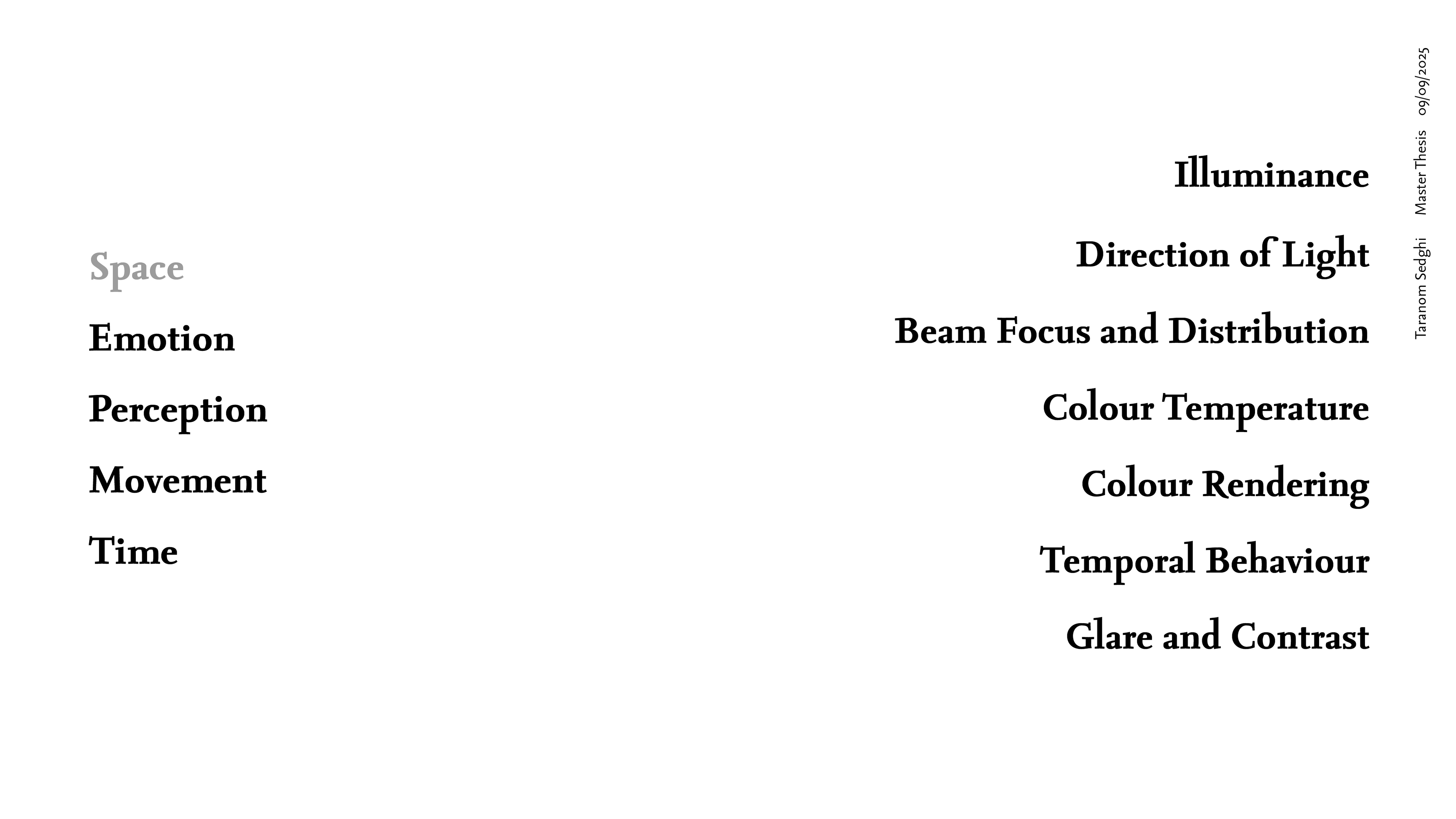
In order to design this experiment, I started by gathering insights from research and case studies. I began to notice a pattern. Some of the most powerful spatial experiences seemed to work by triggering a sense of time, perception, emotion, or movement. These elements could connect stories to space, even without the use of words. That made me think about light differently. What if it had a grammar? What if its characteristics could work like the structure of a language? I decided to treat them that way and use them as tools to shape the experiment.
The Experiment
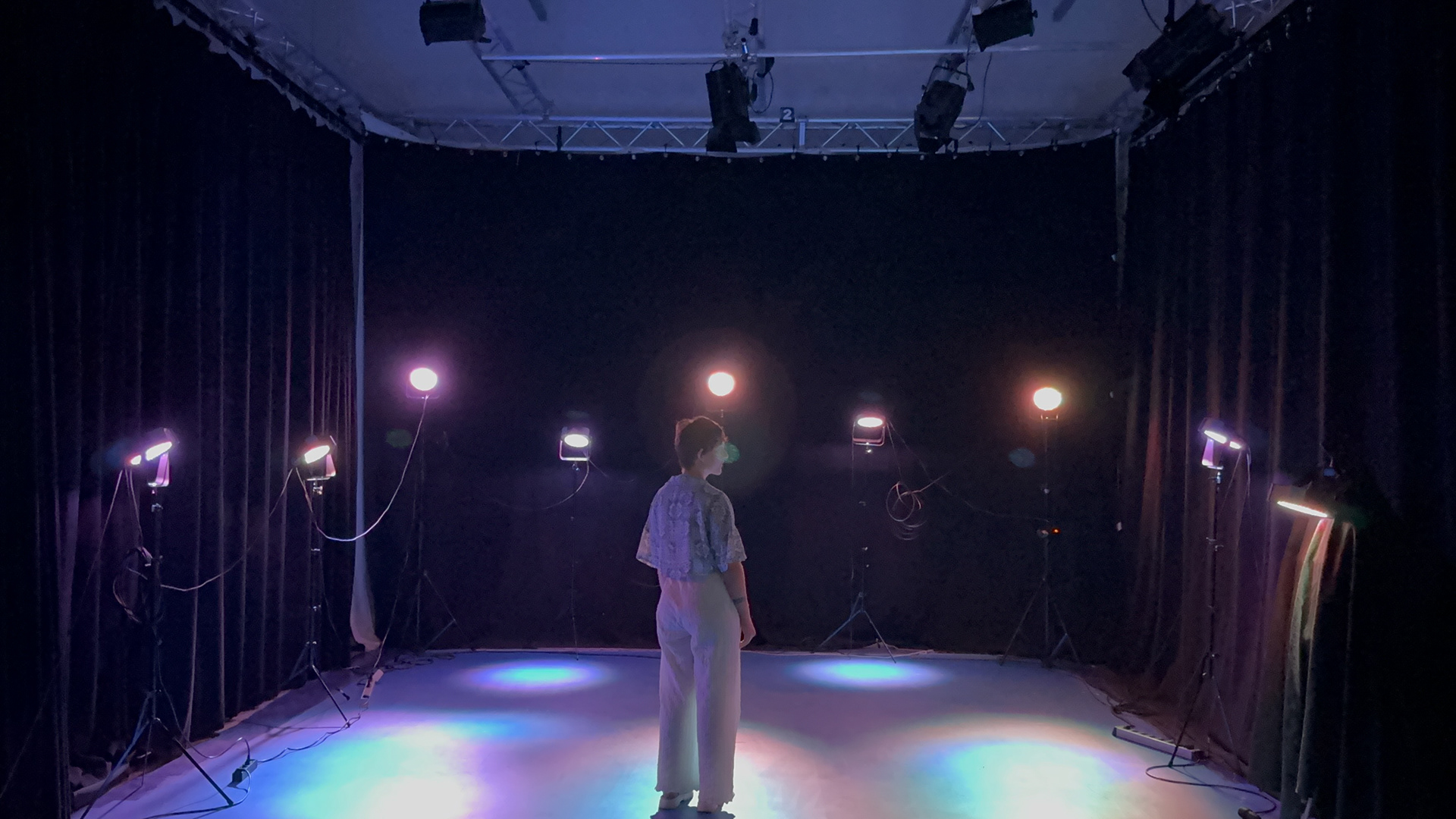
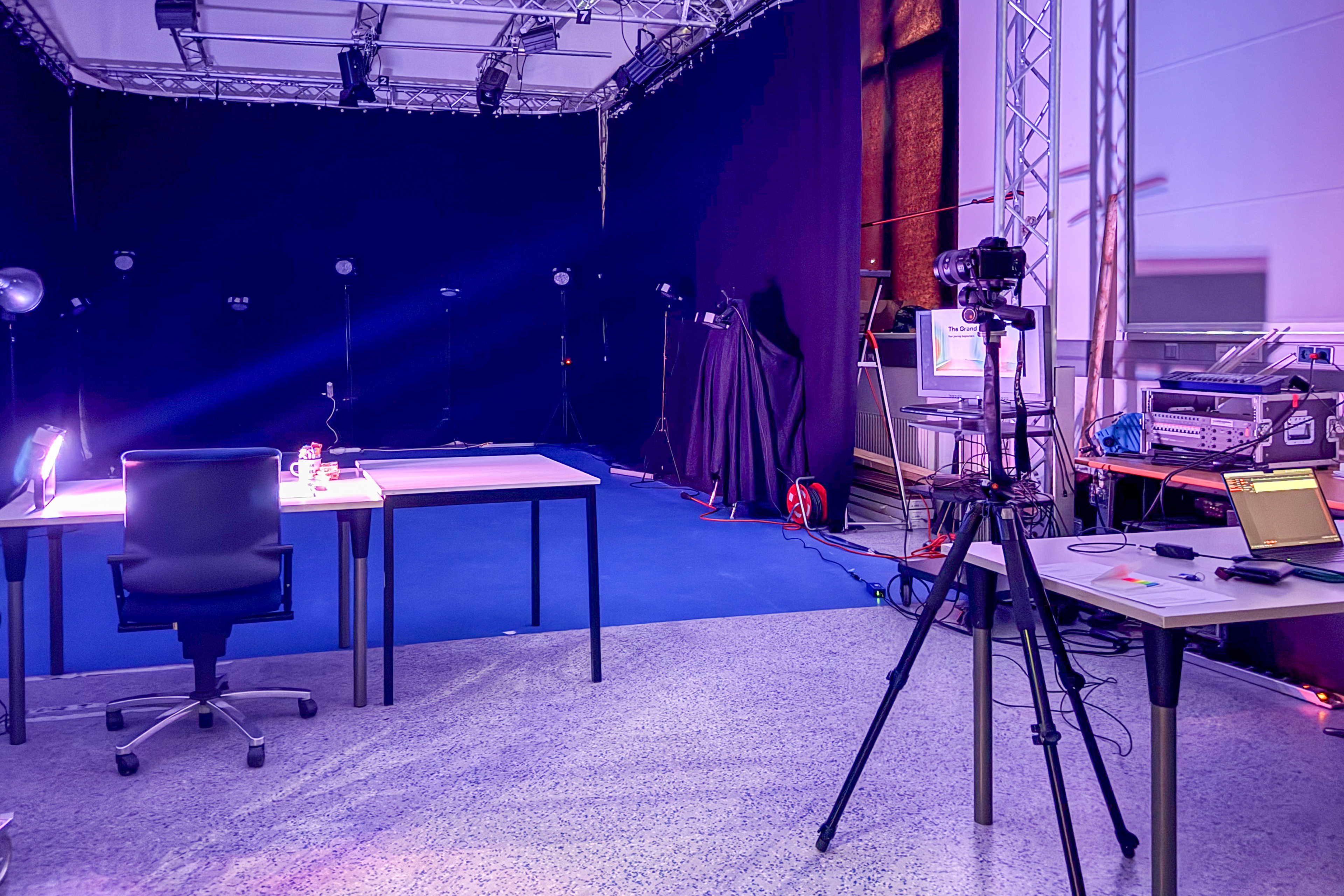
The experiment was conducted in the video studio at FH Joanneum, transformed into a completely blacked-out space. Nine adjustable LED lights were used to shape the room through changes in angle, color, focus, and timing. Each visitor entered alone, without instructions, and encountered four pre-programmed lighting scenarios. These were designed to explore how light could guide movement, evoke emotion, suggest rhythm, or shift attention. There was no sound, no objects, and no architectural features. Only light, precisely timed using Vezer, created the spatial experience.
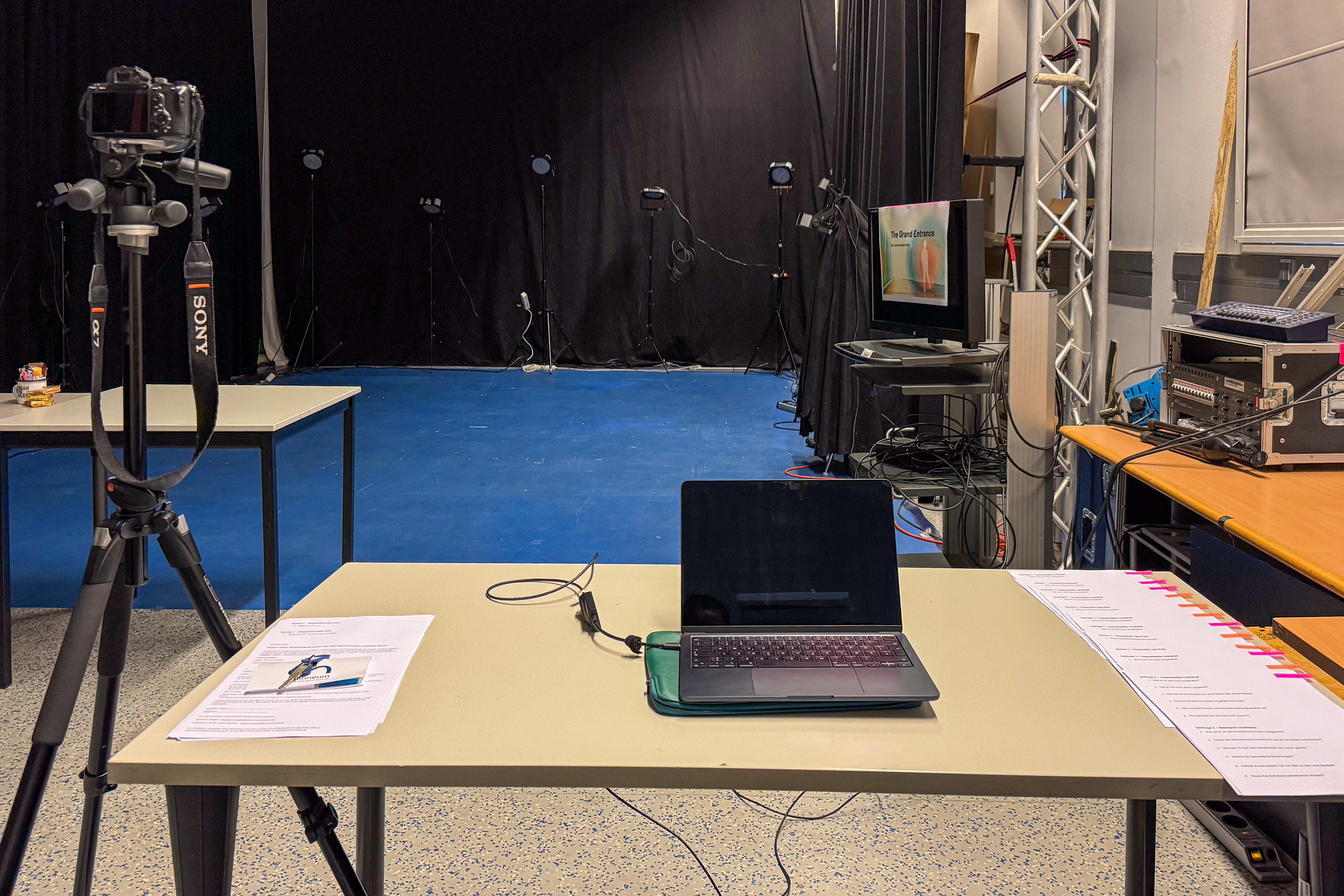
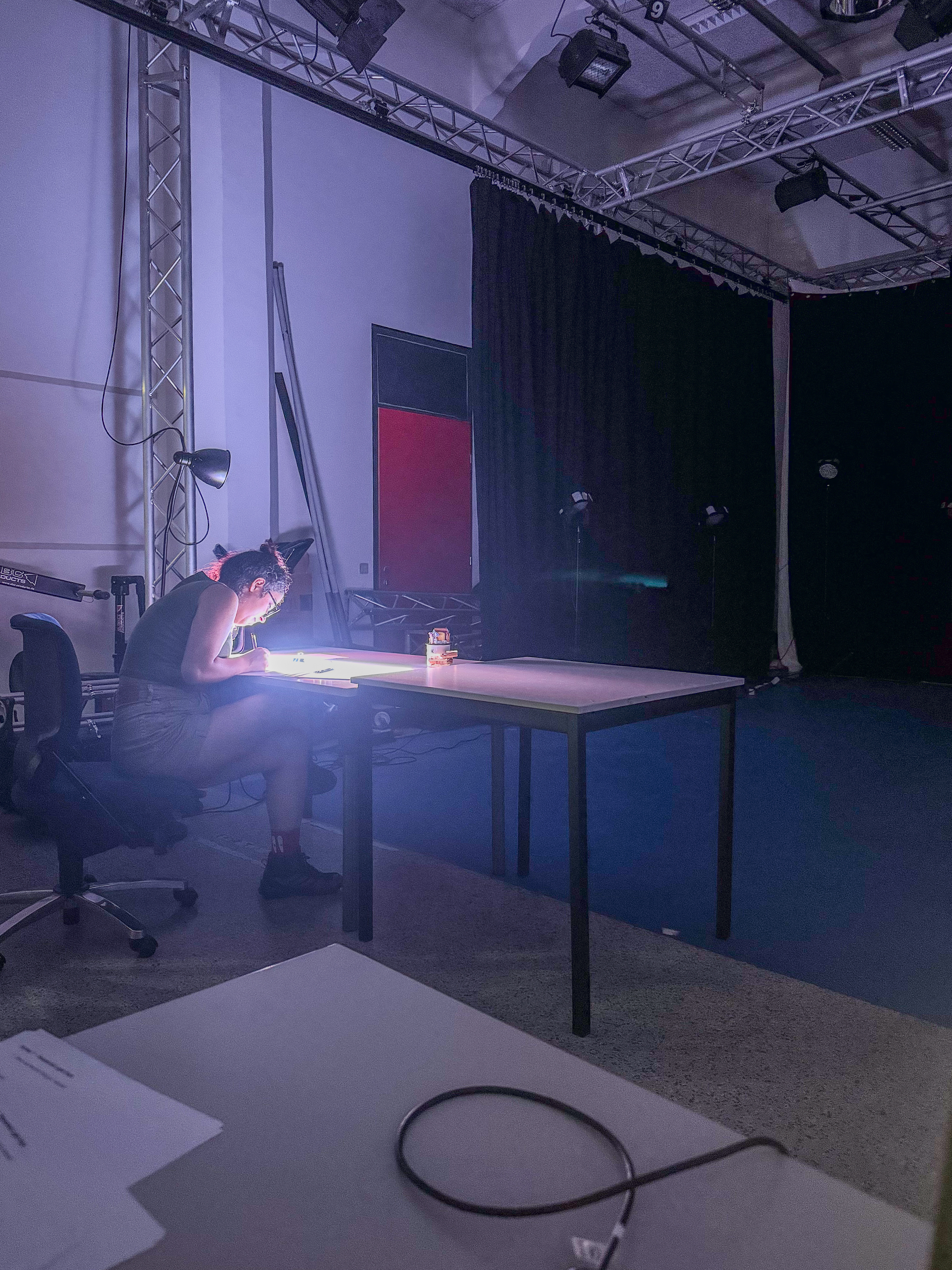
Each participant was picked up individually at the entrance and guided into the experiment.
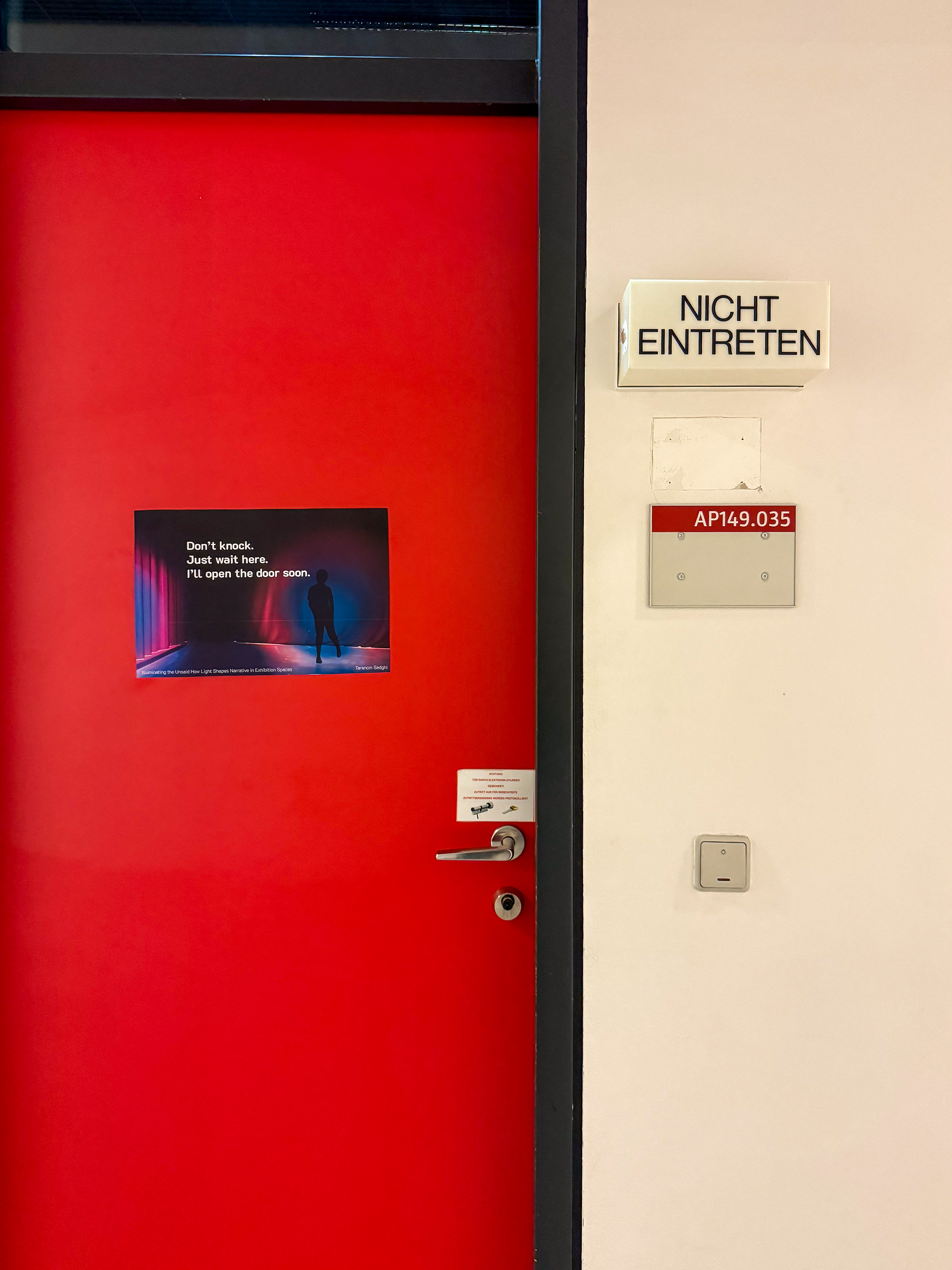
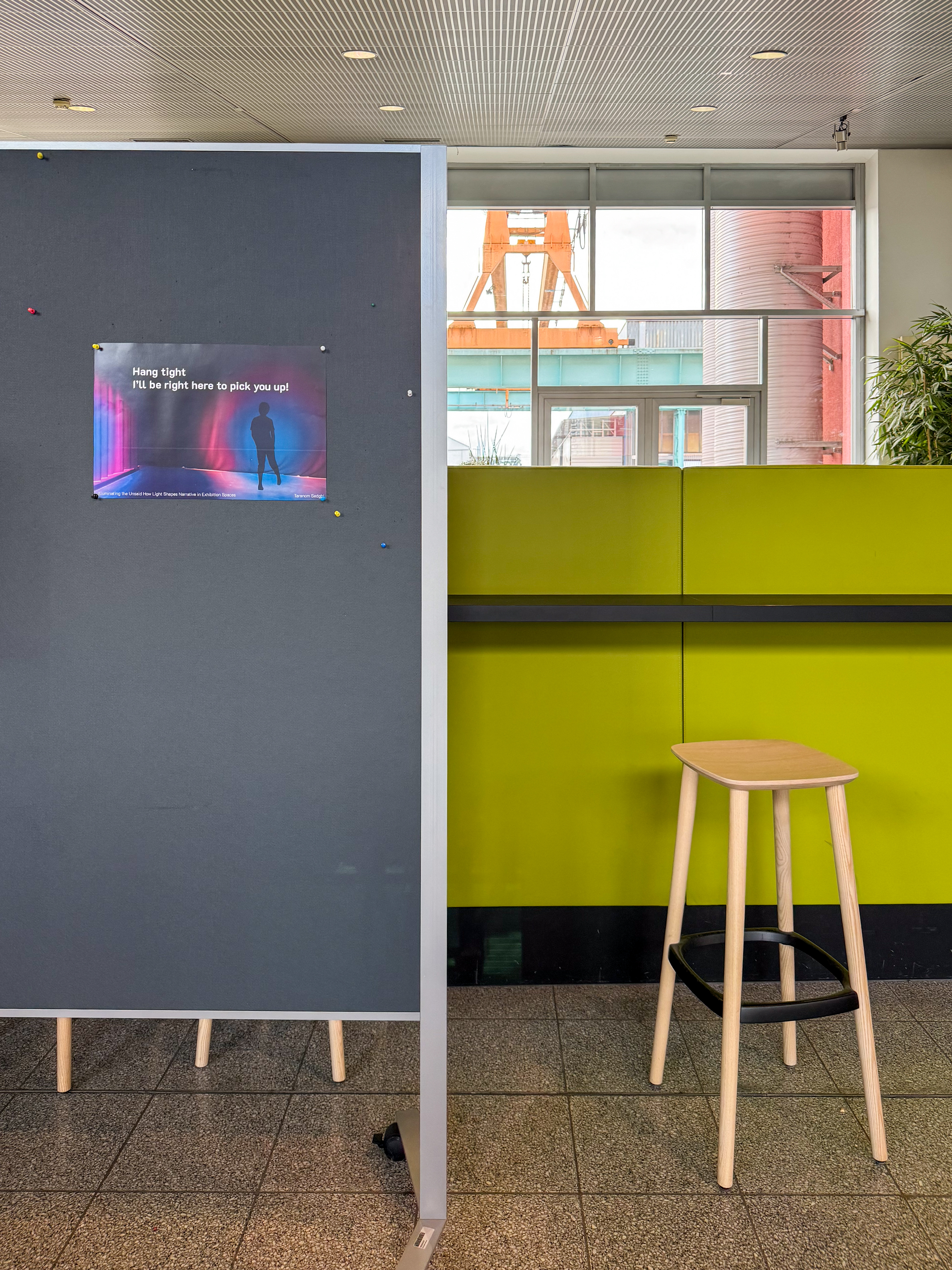
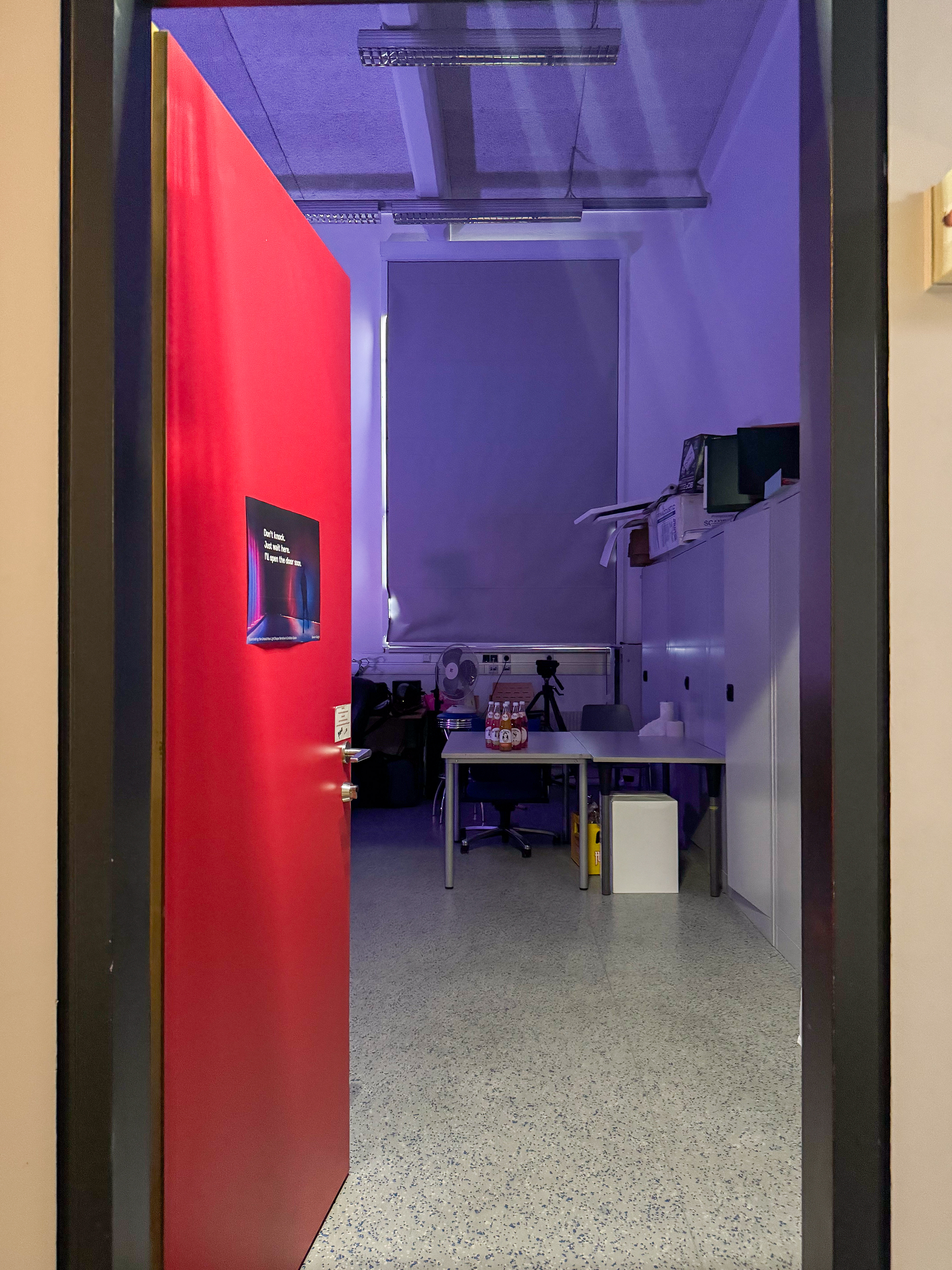
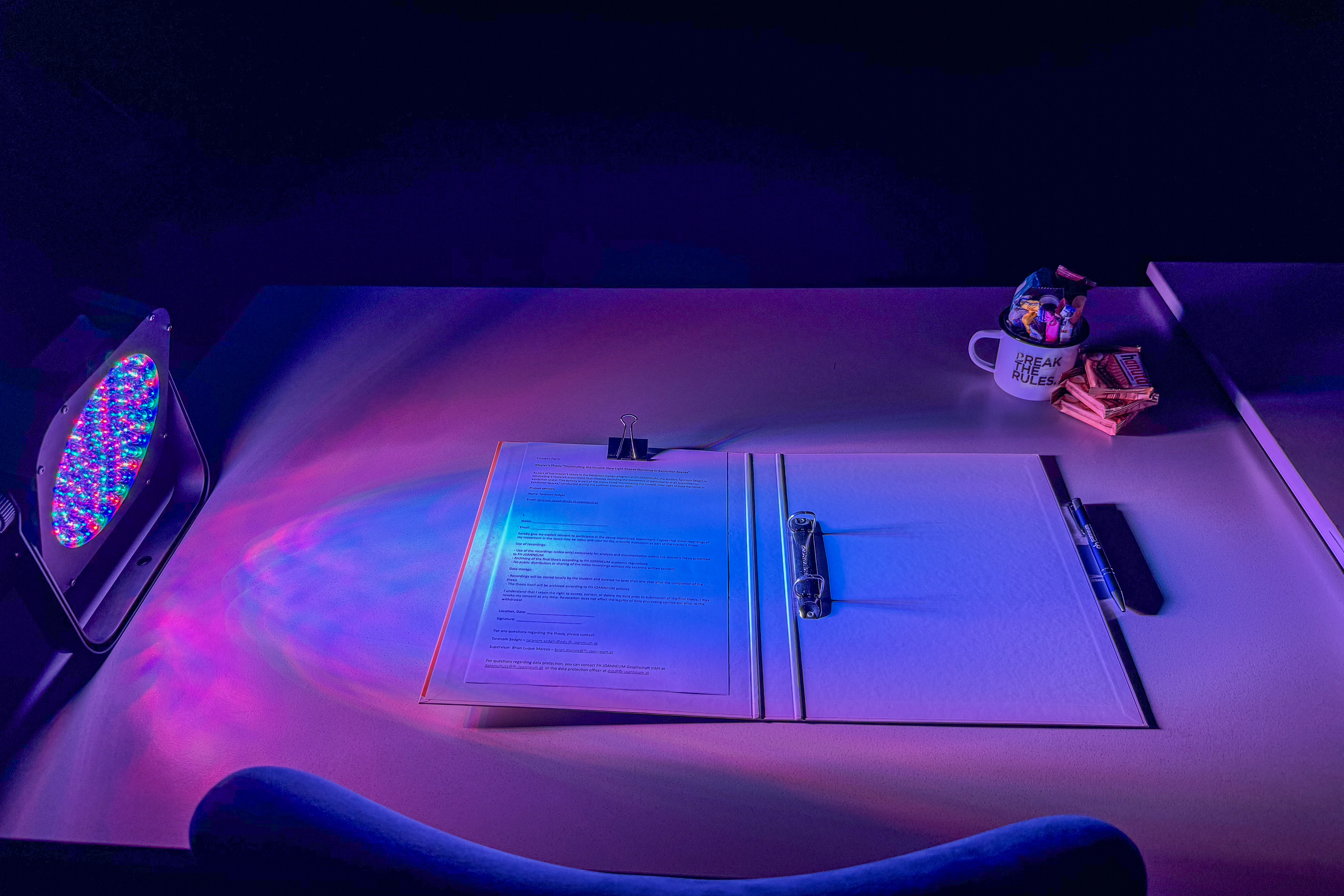
After each scenario, a small light on the table turned on as a cue that the scene had ended. The participant then filled out a short survey before continuing to the next scenario.
Scenario 1: Sequential Light Path
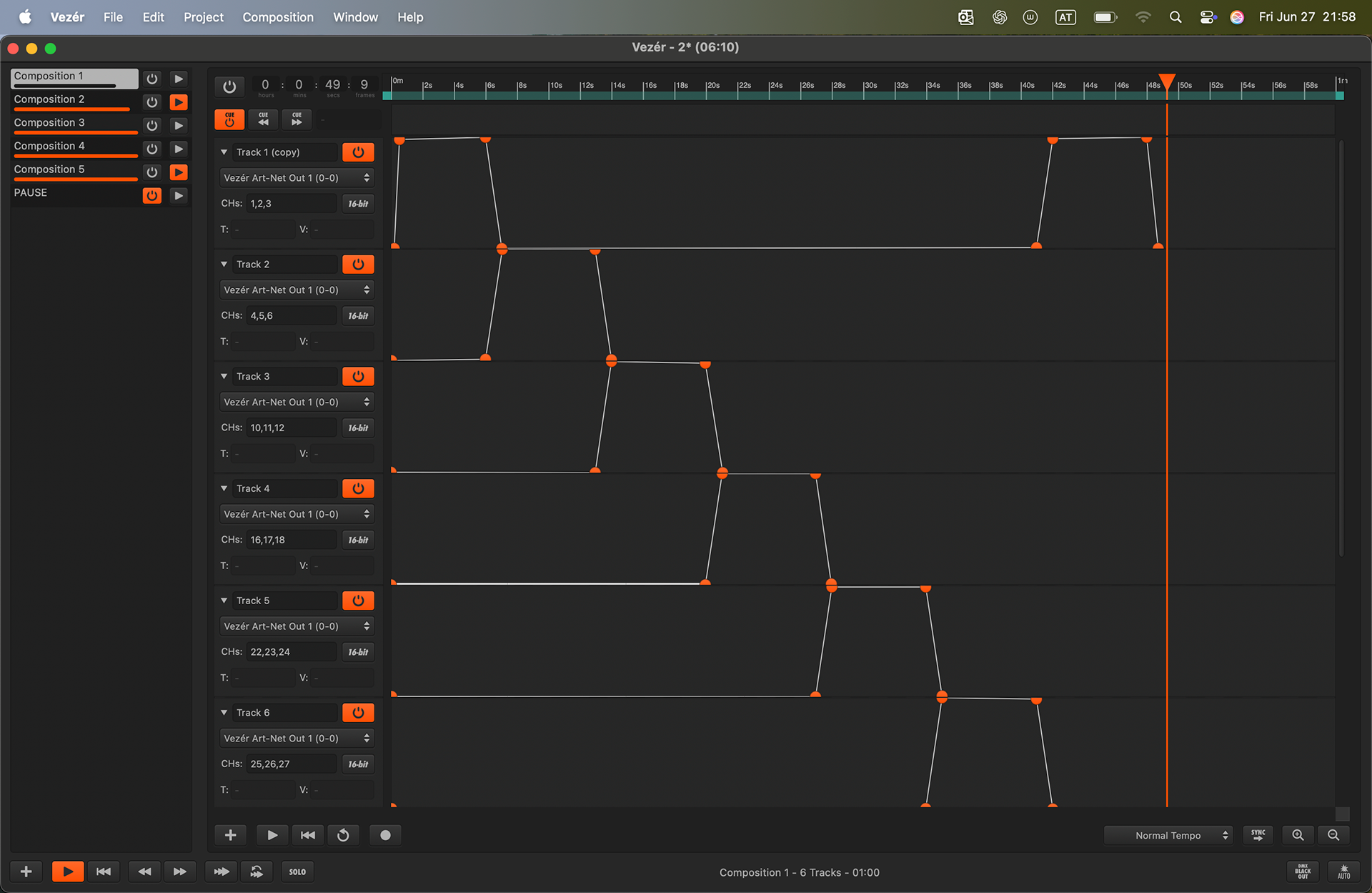
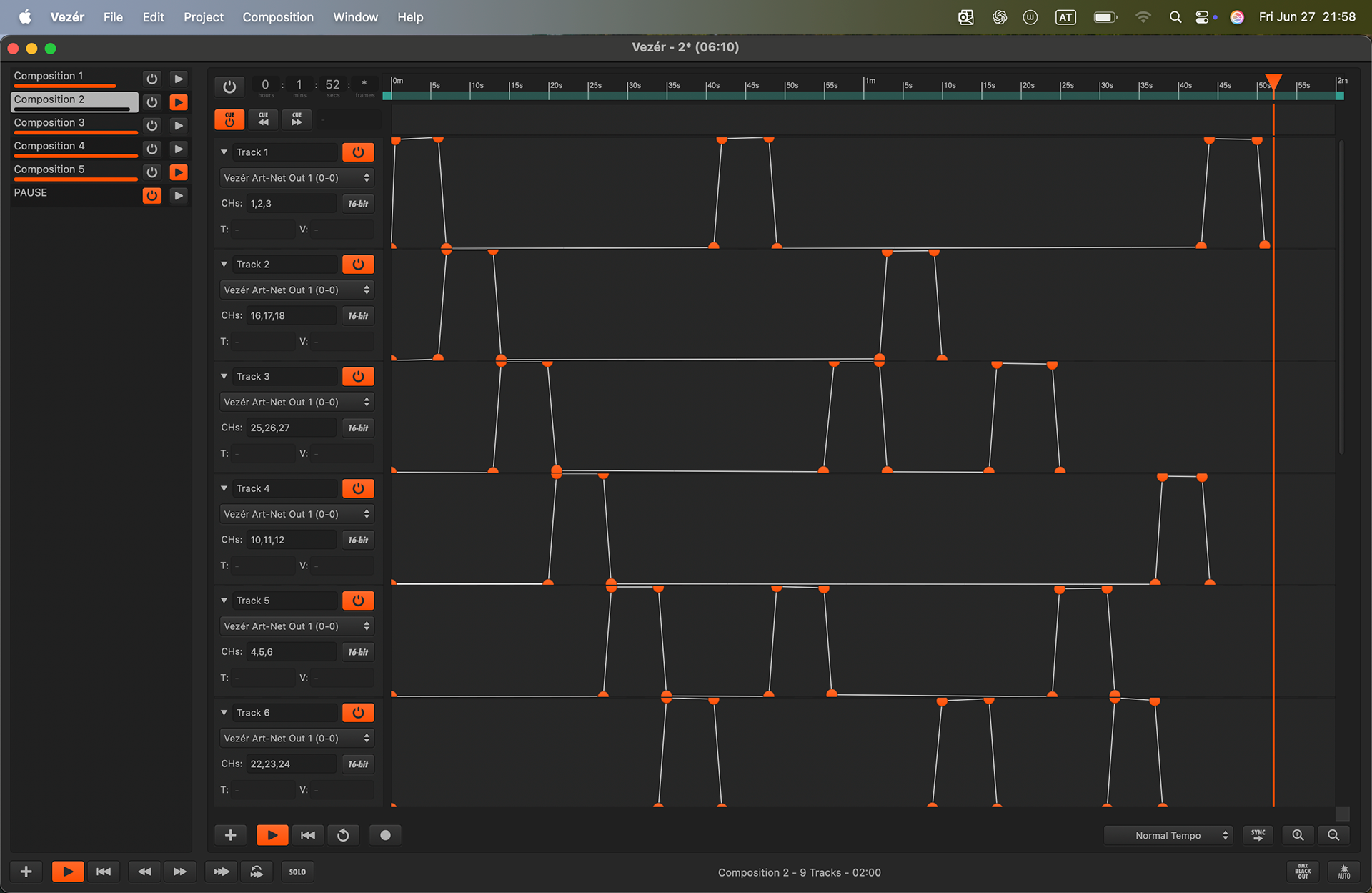
The first scenario explored whether a sequence of light could create a sense of direction or rhythm in a space without any visual guidance. Spotlights were placed at intervals and programmed to fade in gradually, one after another, each with a 7-second interval. This created a smooth and continuous path through the room.
The setup was based on perceptual light characteristics such as direction, distribution, intensity, movement, and adaptation over time. Although the lights themselves did not move, the sequence suggested motion and progression.
The DMX setup via Vezer software
Most participants followed the rhythm and direction of the lights as if they were clear instructions. The gradual sequence of brightness was often read as a path to follow, confirming that light can suggest spatial orientation when arranged over time. However, not everyone responded the same way. A few chose not to walk through the lights and remained at the edges, observing instead of moving. This showed that light can suggest meaning, but it cannot fully control how people interpret it. It can guide, but not guarantee direction.
Scenario 2: Shifting Spotlight
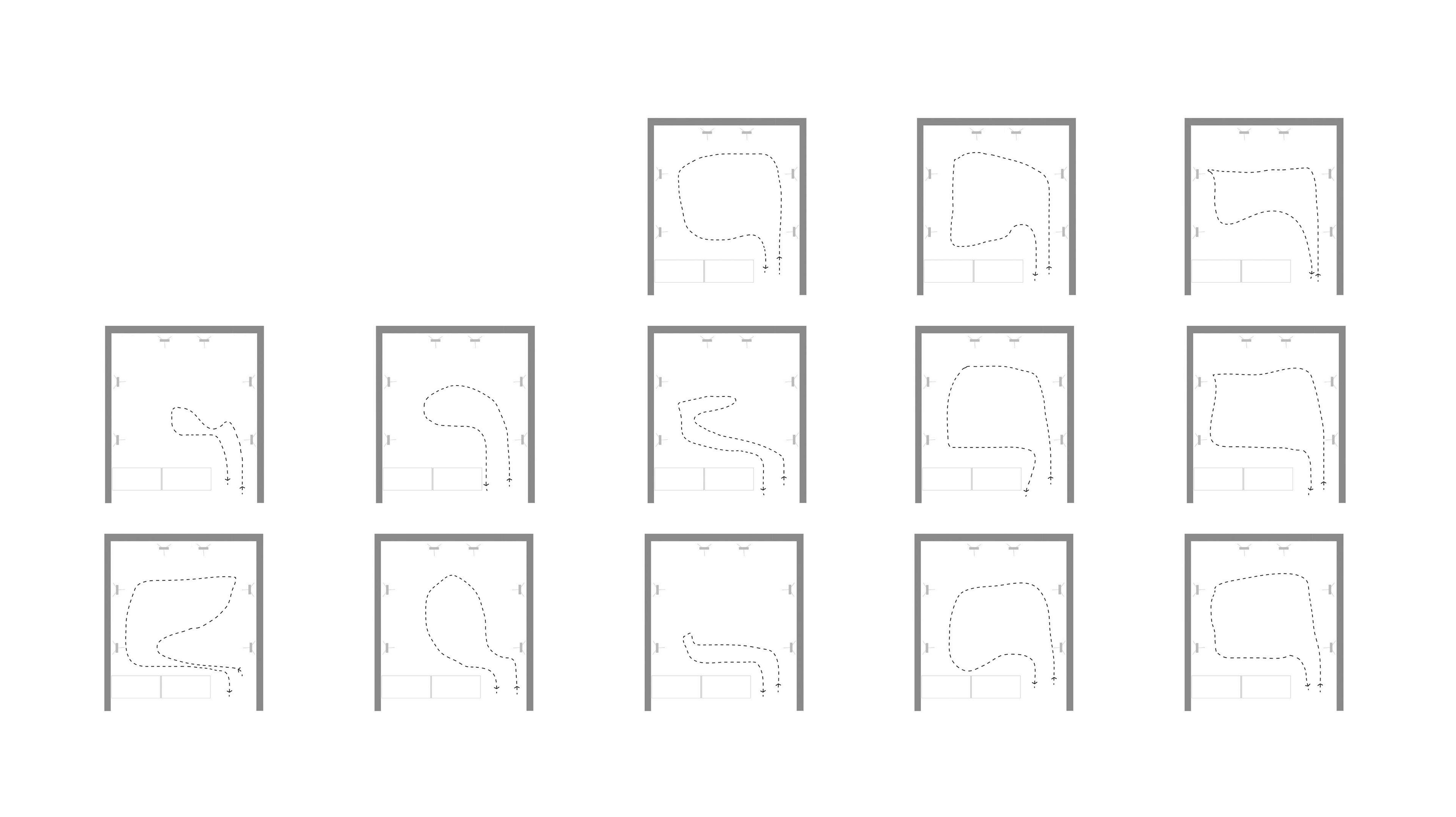
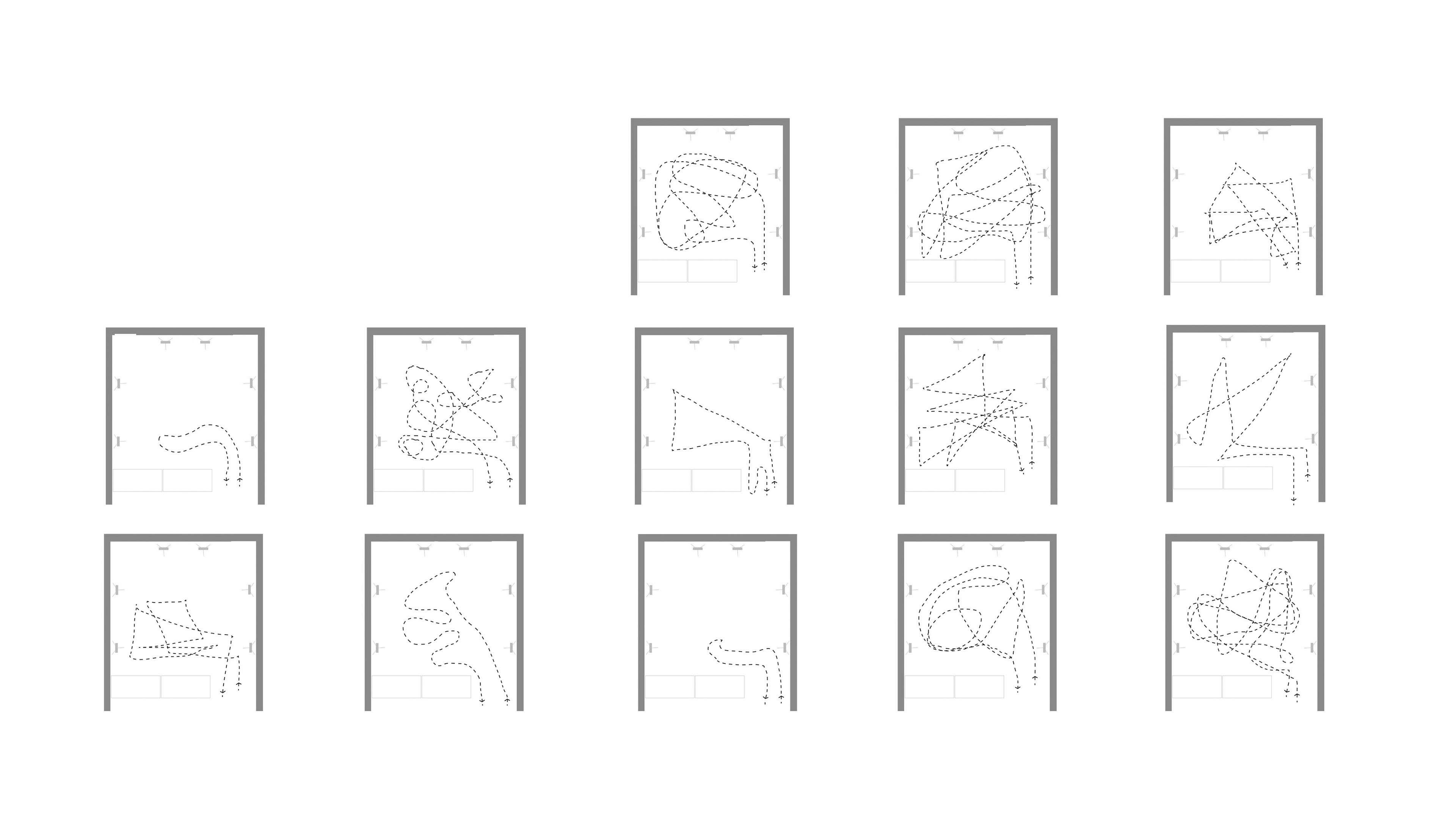
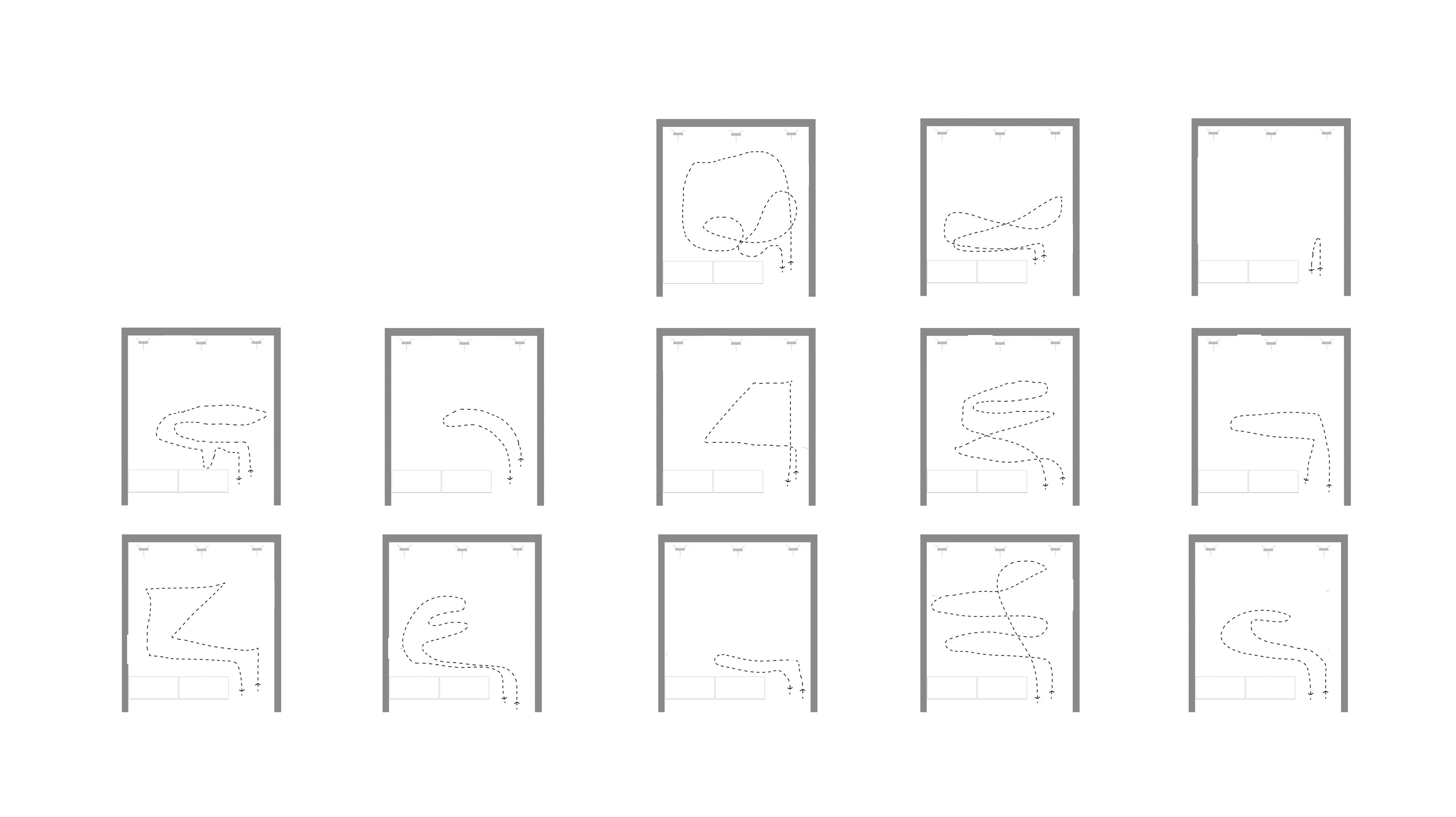
The second scenario explored whether a moving beam of light could prompt people to move through space without physical cues or narrative context. A single spotlight appeared in different locations one after another, creating brief moments of focus across the room. The original plan was to trigger each new light manually, based on the participant’s movement toward the current beam. This semi-responsive method tested whether light could act as a signal to move and whether the participant’s behavior could influence the pacing. When some participants hesitated or moved unpredictably, the system switched to a timed sequence with seven seconds between each light. Even if they did not step directly into the beam, small movements toward it were considered a form of engagement. The scenario asked whether shifting light could suggest a path, guide attention, or be seen as something to observe from a distance.
The DMX setup via Vezer software
This scenario showed how quickly the meaning of light can change depending on context. Some participants expected the lights to guide them forward, similar to the first scenario, and felt confused when that did not happen. Others reacted more emotionally and described the spotlight as expressive or even theatrical, like a performer. These different responses suggest that while contrast and timing can create strong impressions, light without a clear spatial structure becomes more open to interpretation. It invites meaning but does not define it.
Scenario 3: Color Zones
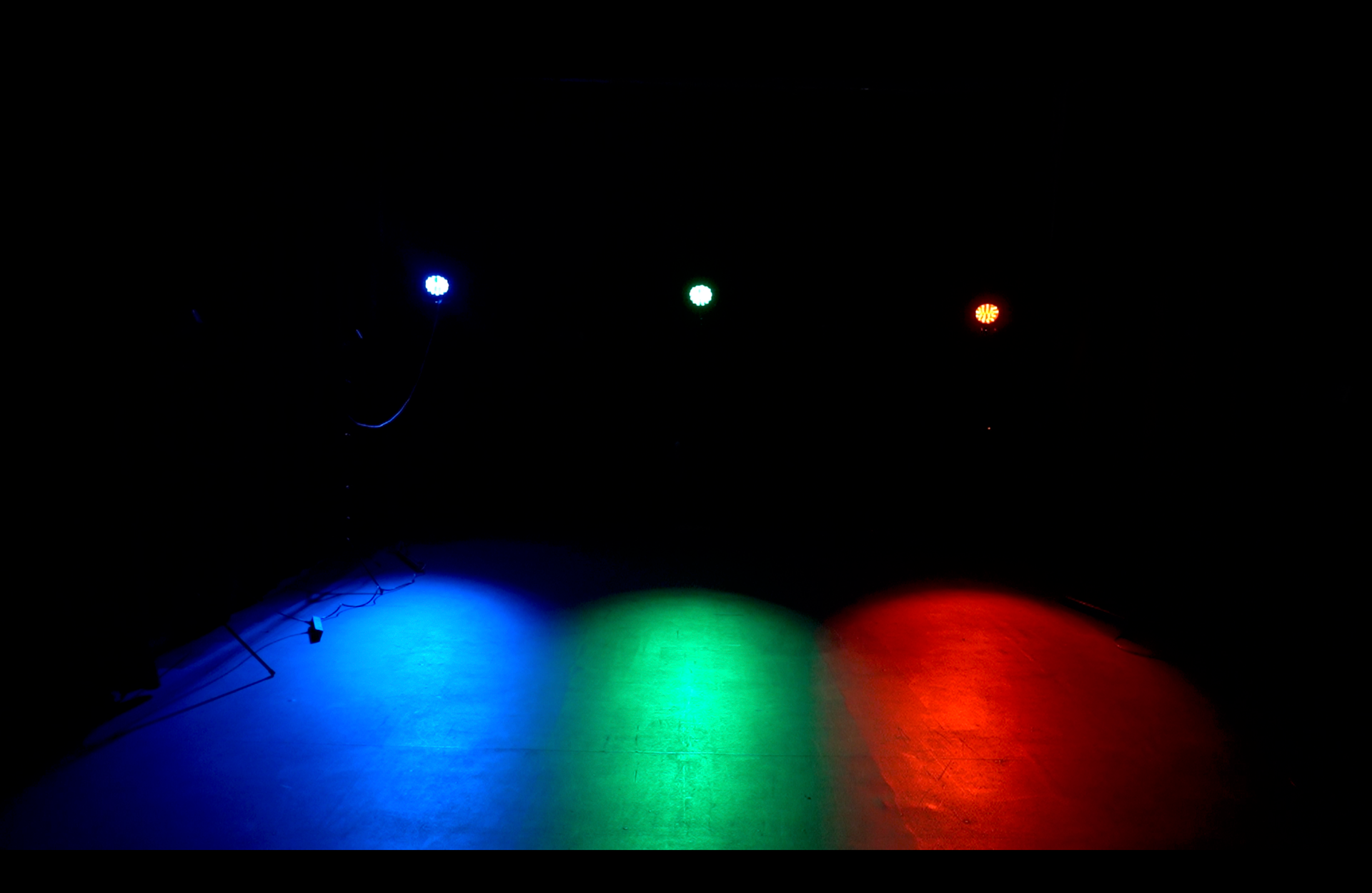
The third scenario explored how static colored light could shape emotional response and spatial behavior in the absence of objects, text, or architectural features. The room was divided into three large chromatic zones — red, green, and blue — created by diffused RGB lights programmed to remain fixed throughout the scene. Unlike the previous scenarios, there was no sequence or movement. The lights did not fade or shift over time, and there were no instructions. Participants entered one by one and moved freely between the zones. The setup was designed to test whether color alone, without explanation, could evoke feelings, suggest orientation, or create a kind of silent narrative. The lights were calibrated to equal brightness, so the only difference came from hue. While the colors were technically chosen, their emotional impact was central. As Fernández writes, color modifies the perception of space and communicates emotional and symbolic information. This scenario asked whether those effects could create an immersive experience where visitors assign meaning through contrast, mood, and personal association.
The DMX setup via Vezer software
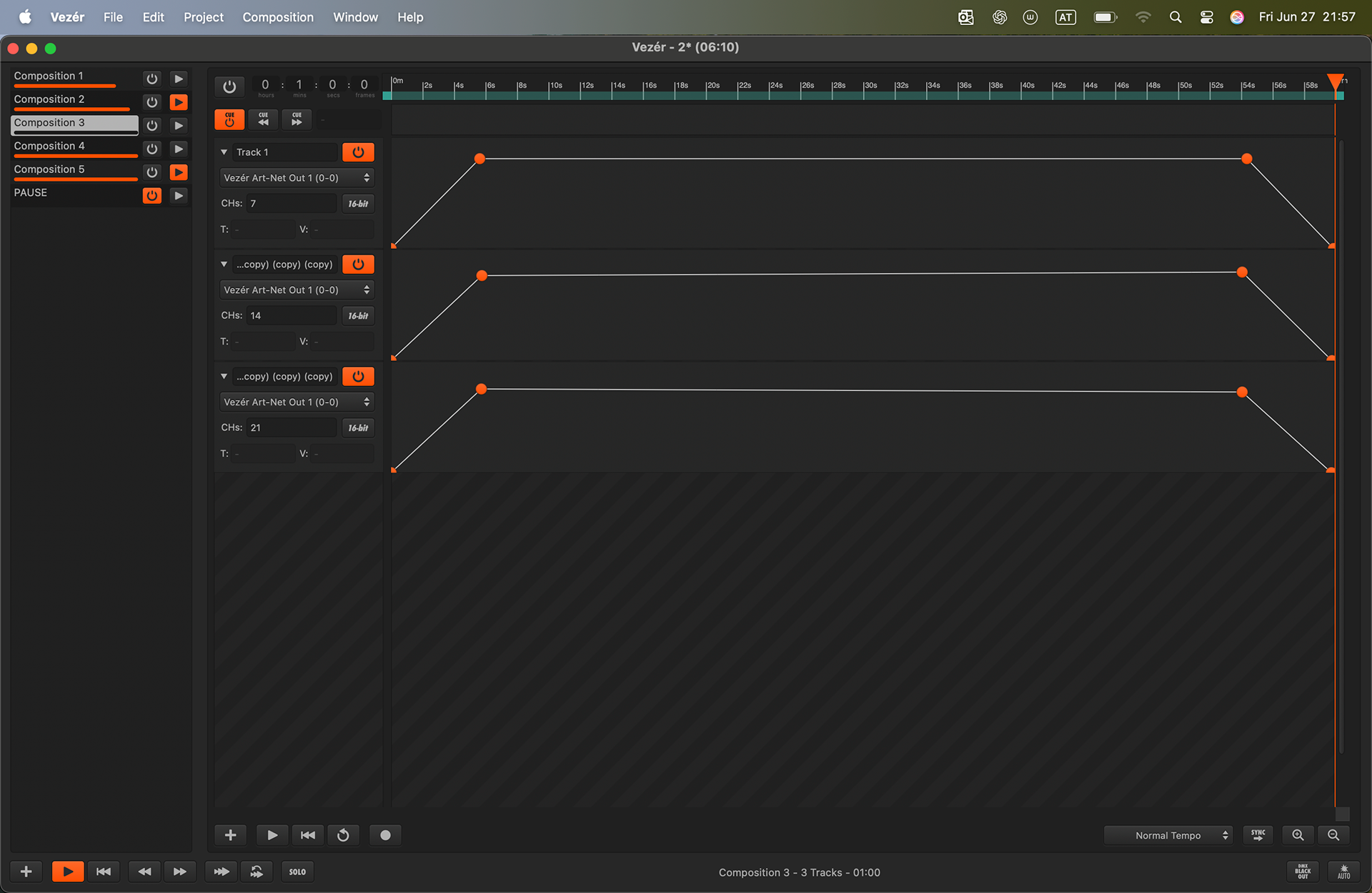
Participants responded in very different ways to this scenario. Some described emotional shifts as they moved between the red, green, and blue areas, while others remained neutral or unaffected. Many chose to stay in the central green zone rather than exploring all three, which may have been influenced by the linear layout. This suggests that color can create emotional zones and support narrative atmosphere, but the impact depends on how the space is arranged and how visitors choose to move within it. When light surrounds rather than directs, the story comes more from the visitor than from the design.
Scenario 4: Rhythmic Glow
The fourth scenario explored how rhythm and brightness could influence time perception and emotional pacing. All lights created a soft, immersive glow that pulsed slowly at first, then suddenly stopped. When the light returned, the rhythm became irregular, shifting between faster and slower pulses. This change was meant to disrupt the visitor’s internal sense of timing and create a subtle emotional shift. The scene did not direct movement but tested whether light alone, through rhythm and variation, could suggest a beginning, interruption, and return.
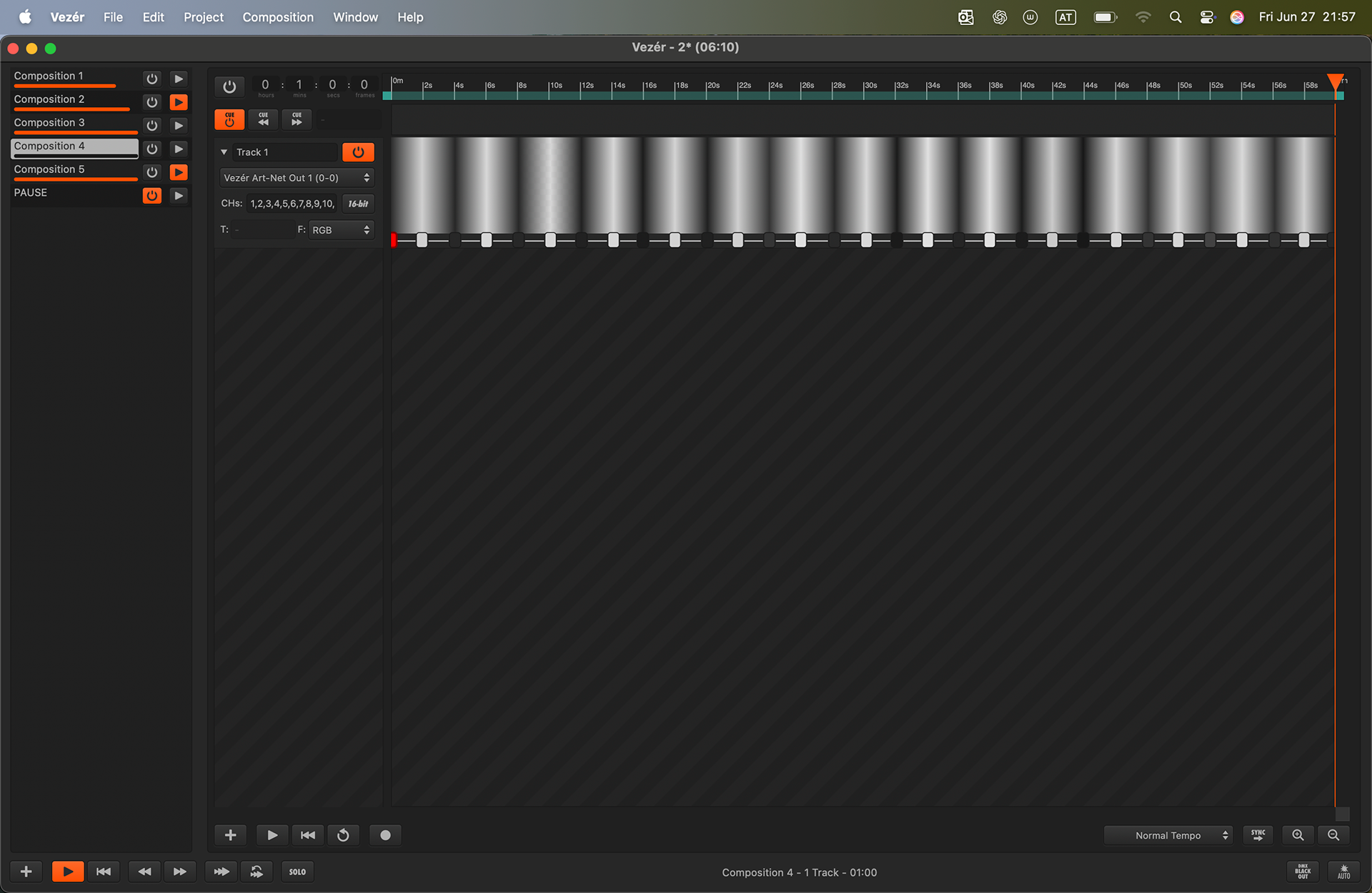
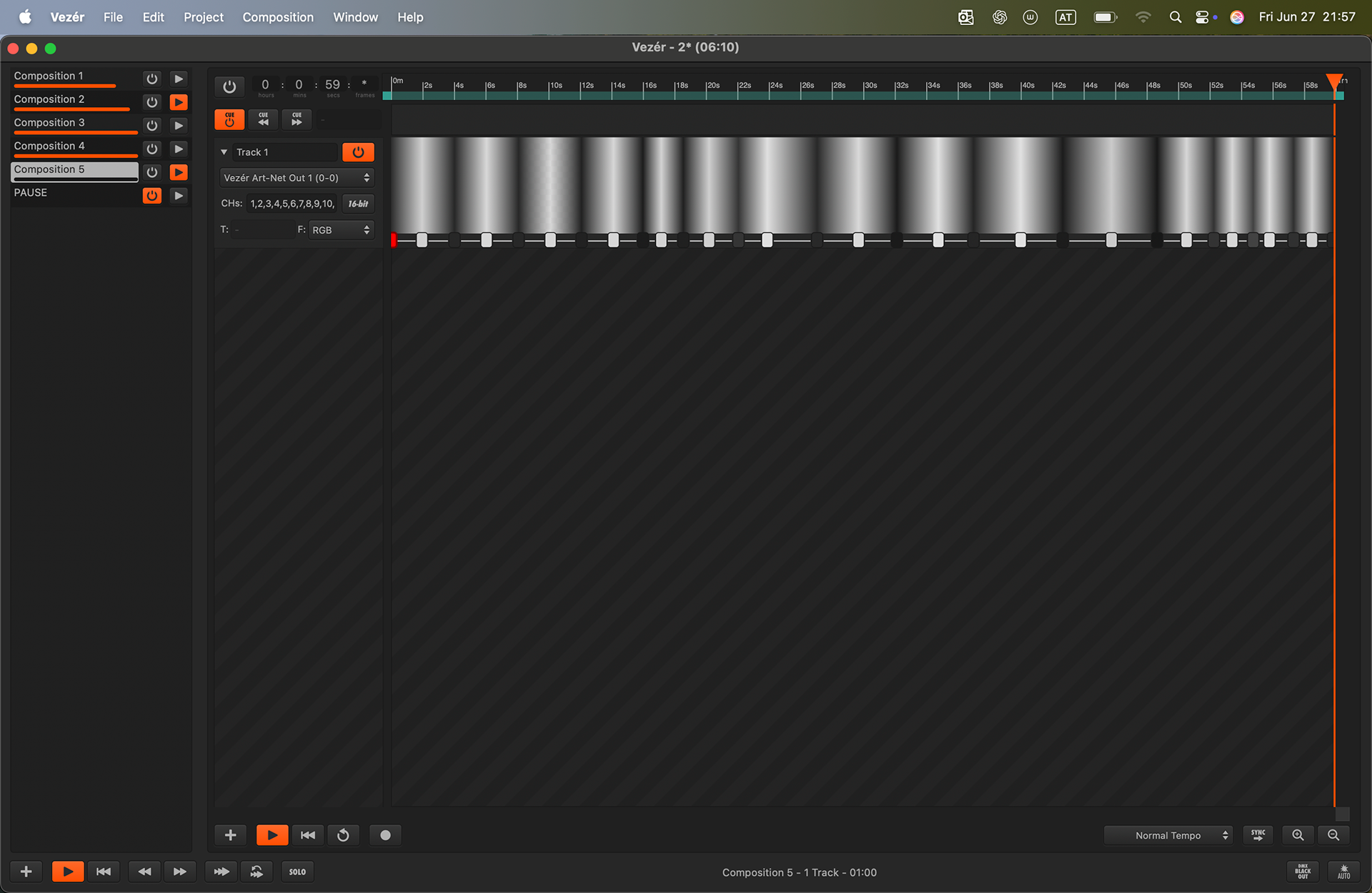
Most participants described the changing rhythm of light as meaningful or emotional. The scene began with a slow, steady pulse that many found calming. When the light suddenly shifted into an irregular rhythm, the atmosphere changed noticeably. Participants stayed still, but their reactions suggested a clear emotional response. This scenario showed that light does not need to guide movement to shape experience. Through rhythm and pause, it can create tension, release, and a quiet sense of drama that unfolds over time.
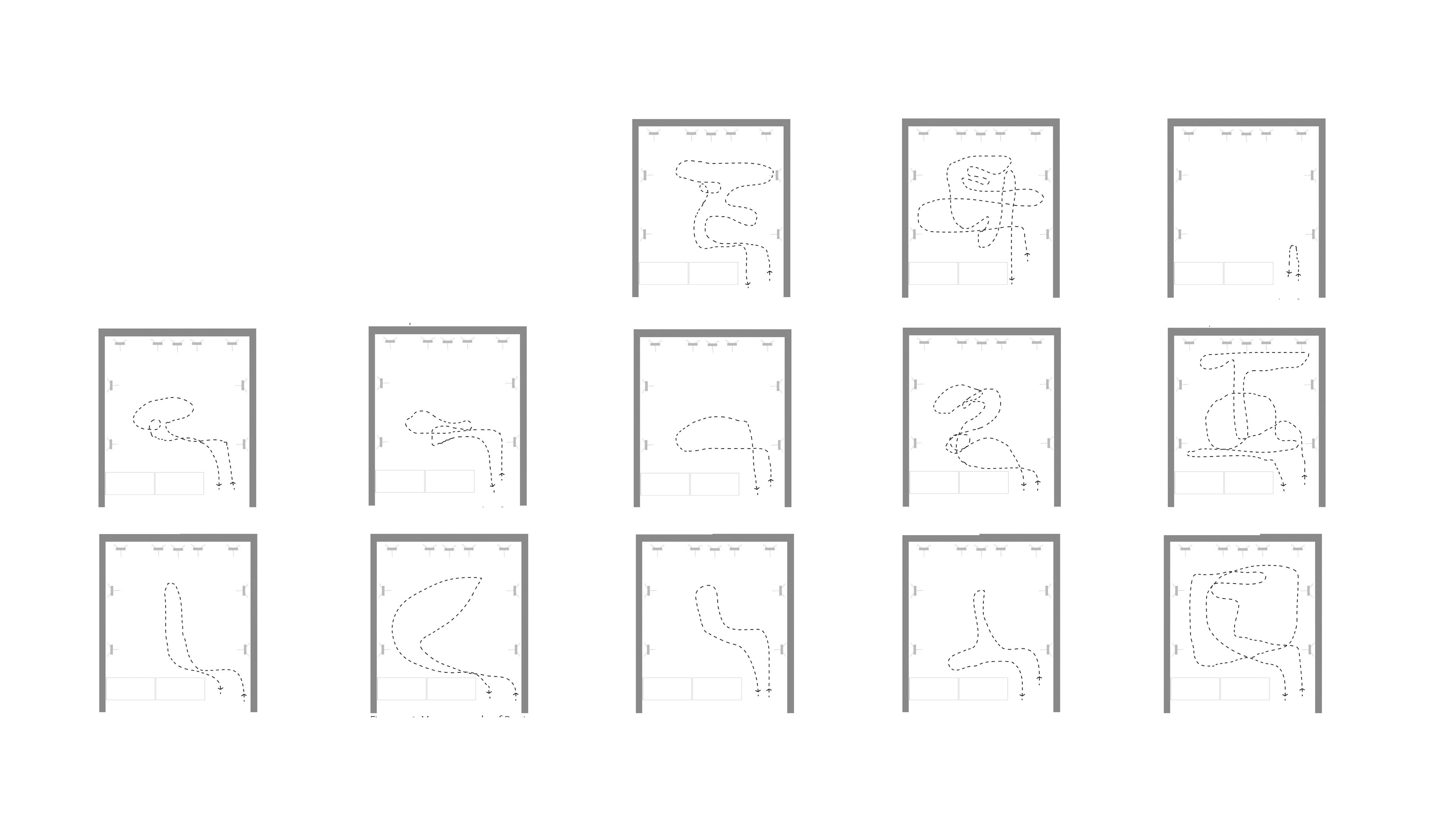
This experiment was a way to test whether light on its own could act as a storyteller. Each scenario focused on a different narrative element — movement, focus, emotion, and rhythm — using only light to shape the experience. The results showed that light can guide, suggest, and evoke, but it cannot fully tell a story without the visitor’s interpretation. Meaning was created through interaction, memory, and perception. In the end, light offered the structure, but the visitor brought it to life. This experiment became the foundation for the design that followed, where light and space come together to invite not one story, but many.