The Elephant in the Dark
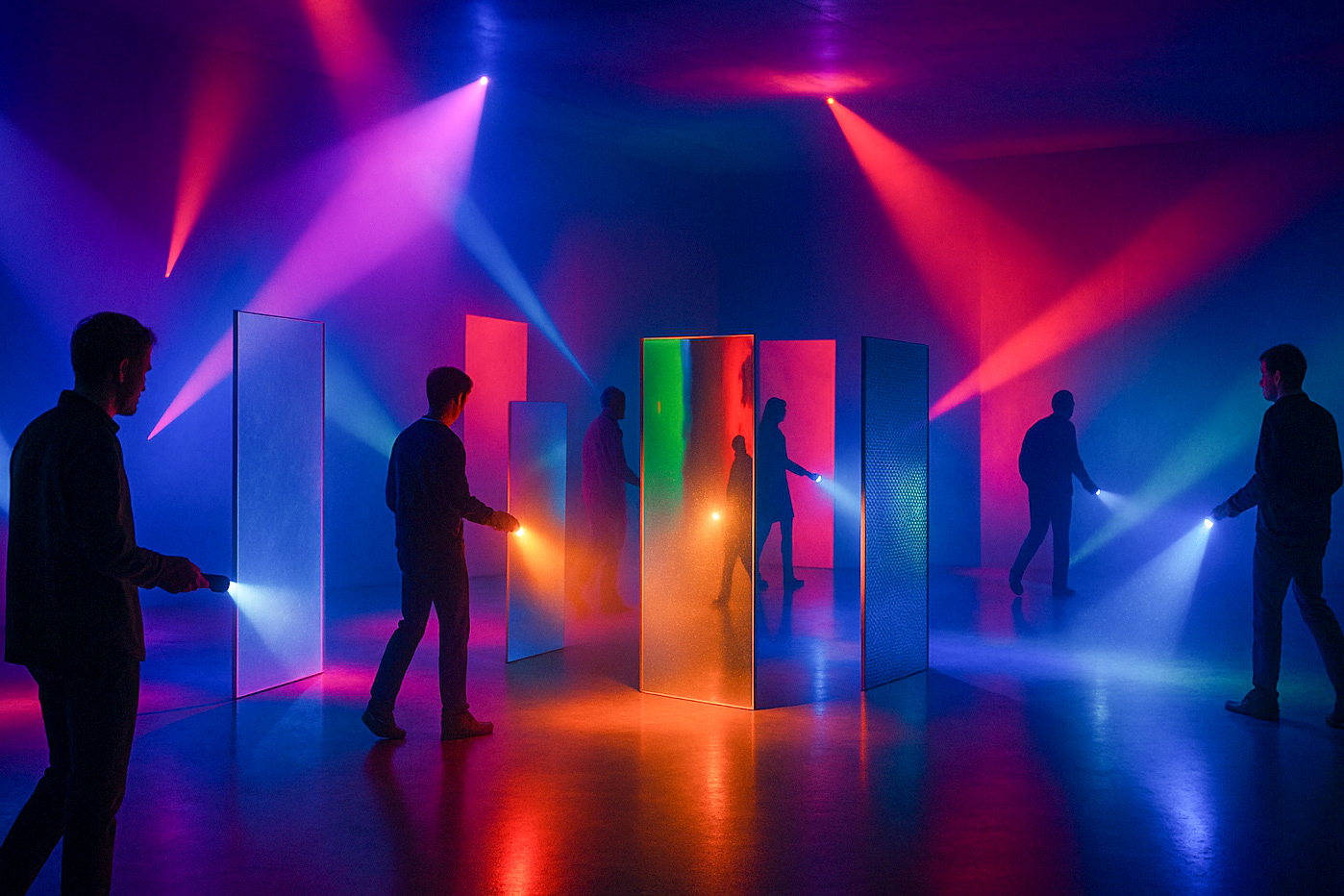
No one sees the whole elephant.
In Rumi's poem, men touch an elephant in the dark. One feels a trunk, one a leg, one an ear, and each is sure he knows the truth.
I built that room. You walk in carrying your own light, and the darkness answers. Sensors wake fragments of the space as you move: a reflection here, a glow through a translucent panel there. Your path becomes your version of the story.
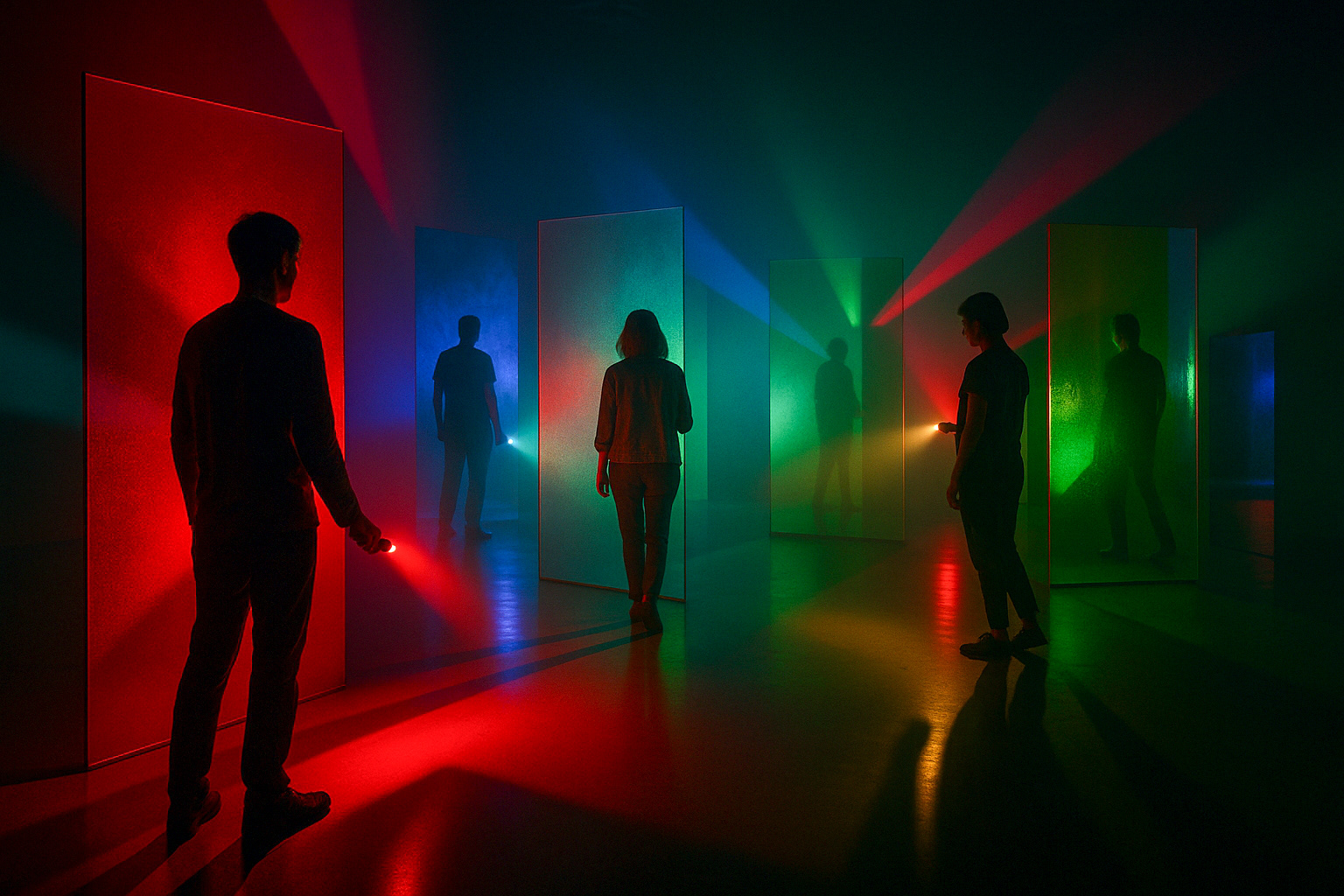
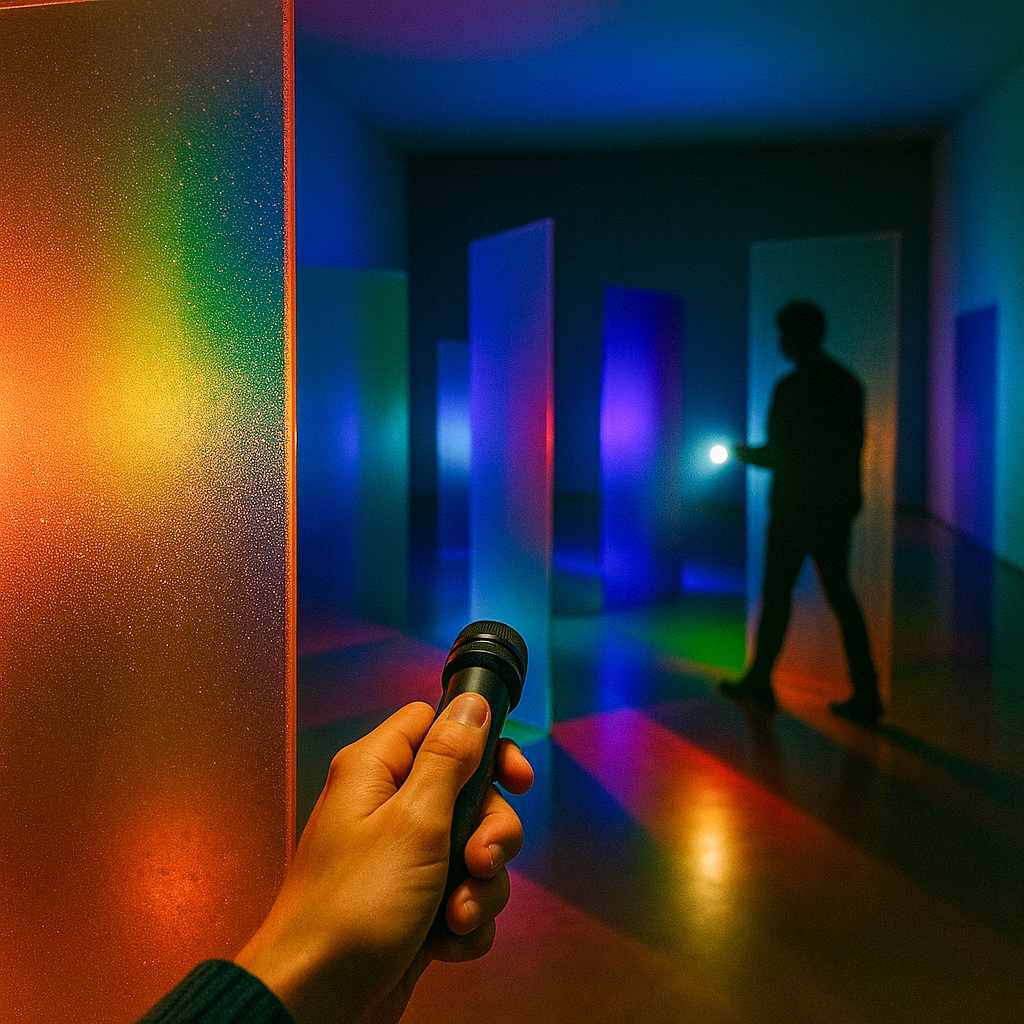
Above you, a camera keeps its shutter open for fifteen minutes. It gathers every visitor's light trail into one image. Only there, when all the fragments meet, does the elephant appear.
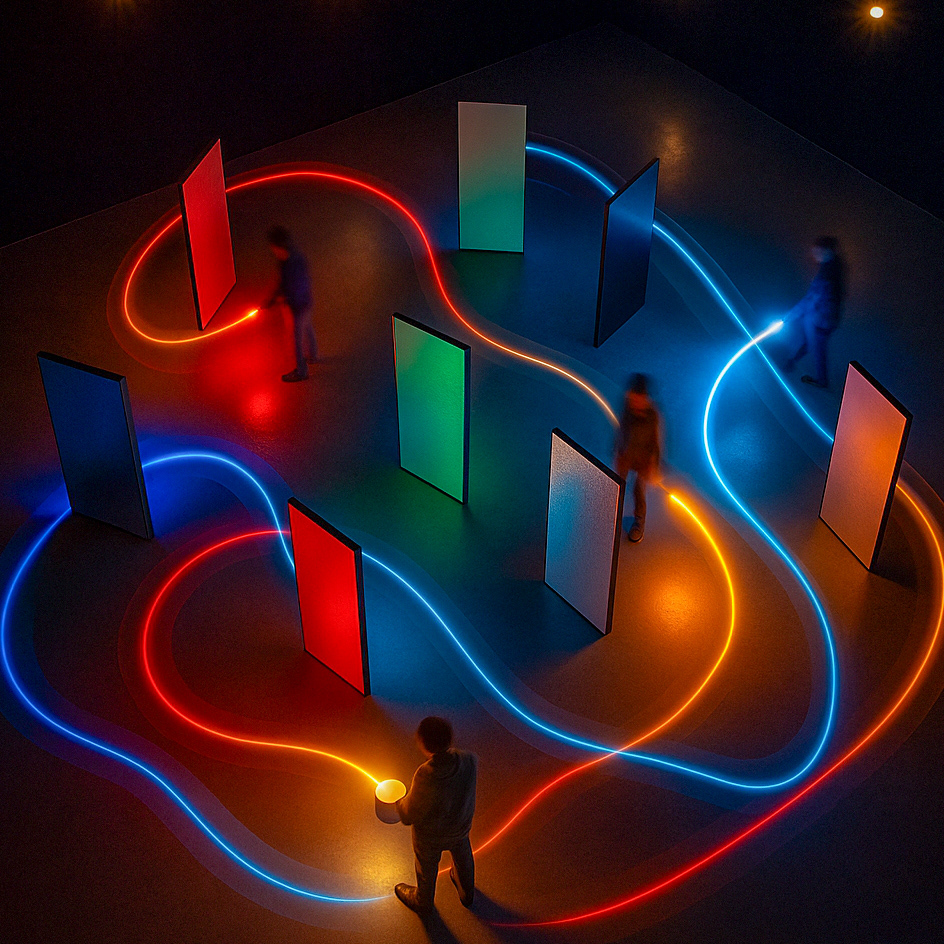
Three ways to see
Three visitor journeys shaped the design: patient observation with a torch, cautious and social discovery with a phone light, and playful experimentation with a small lantern. Each path reveals a different version of the same room.
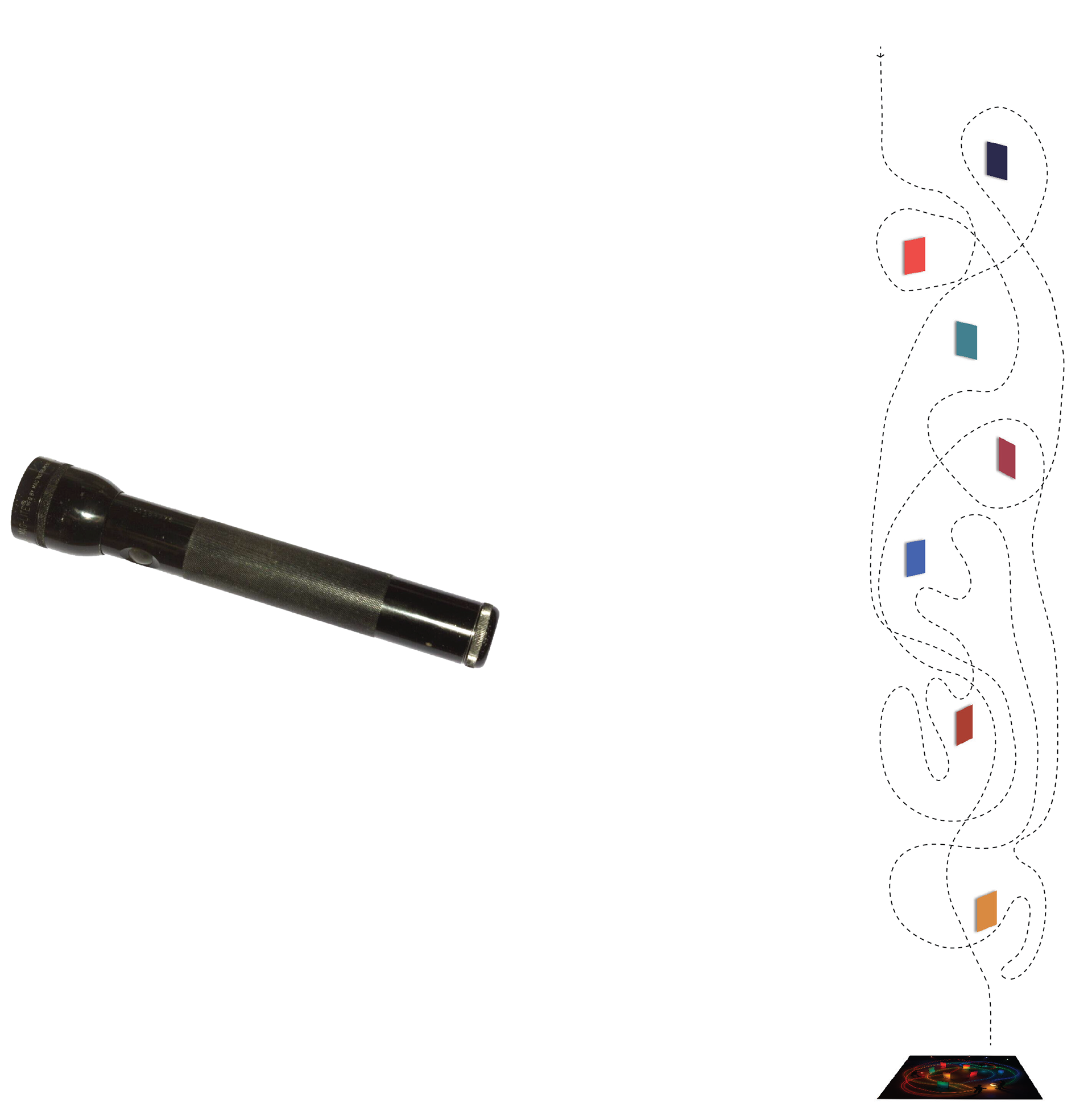
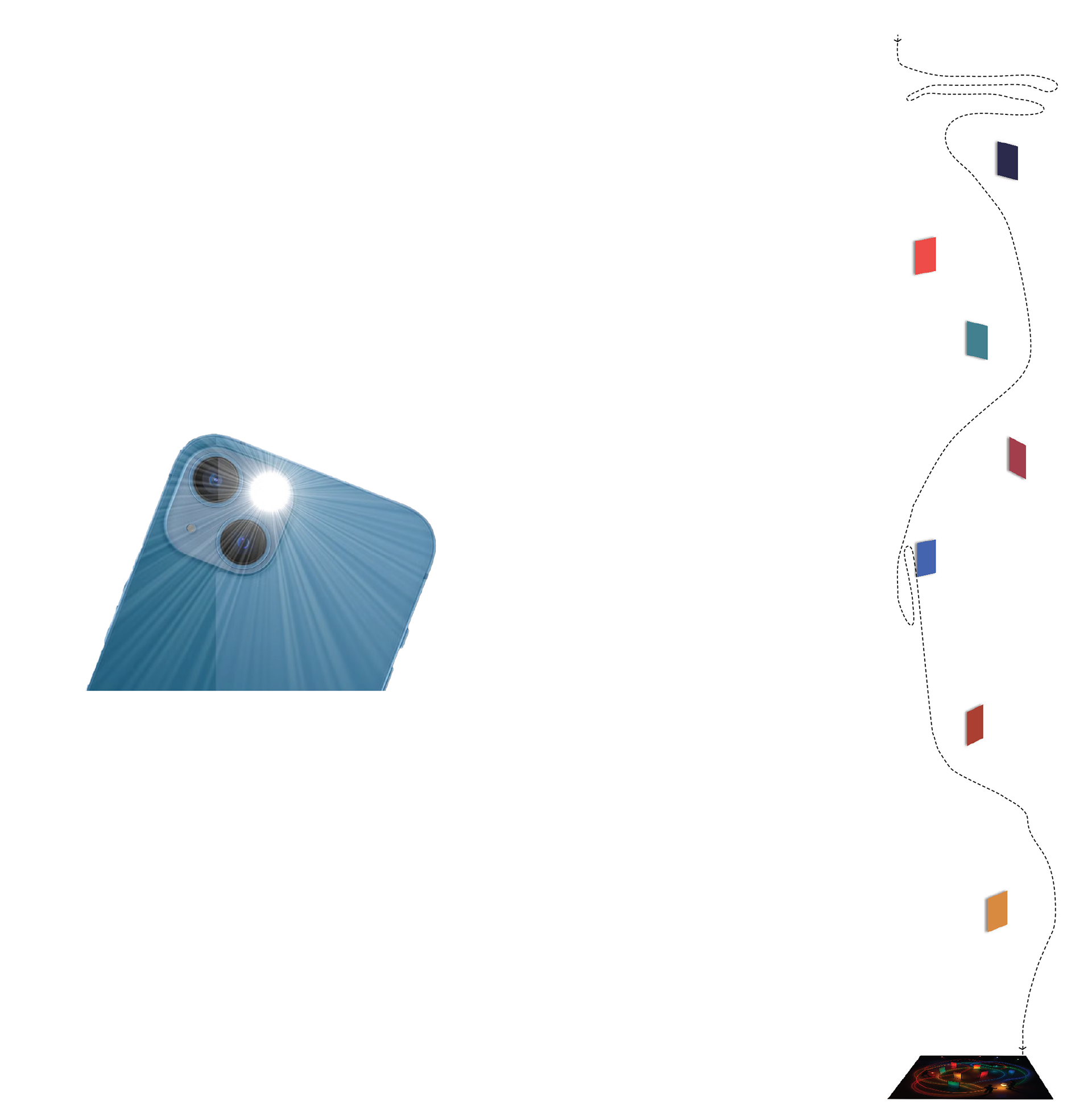
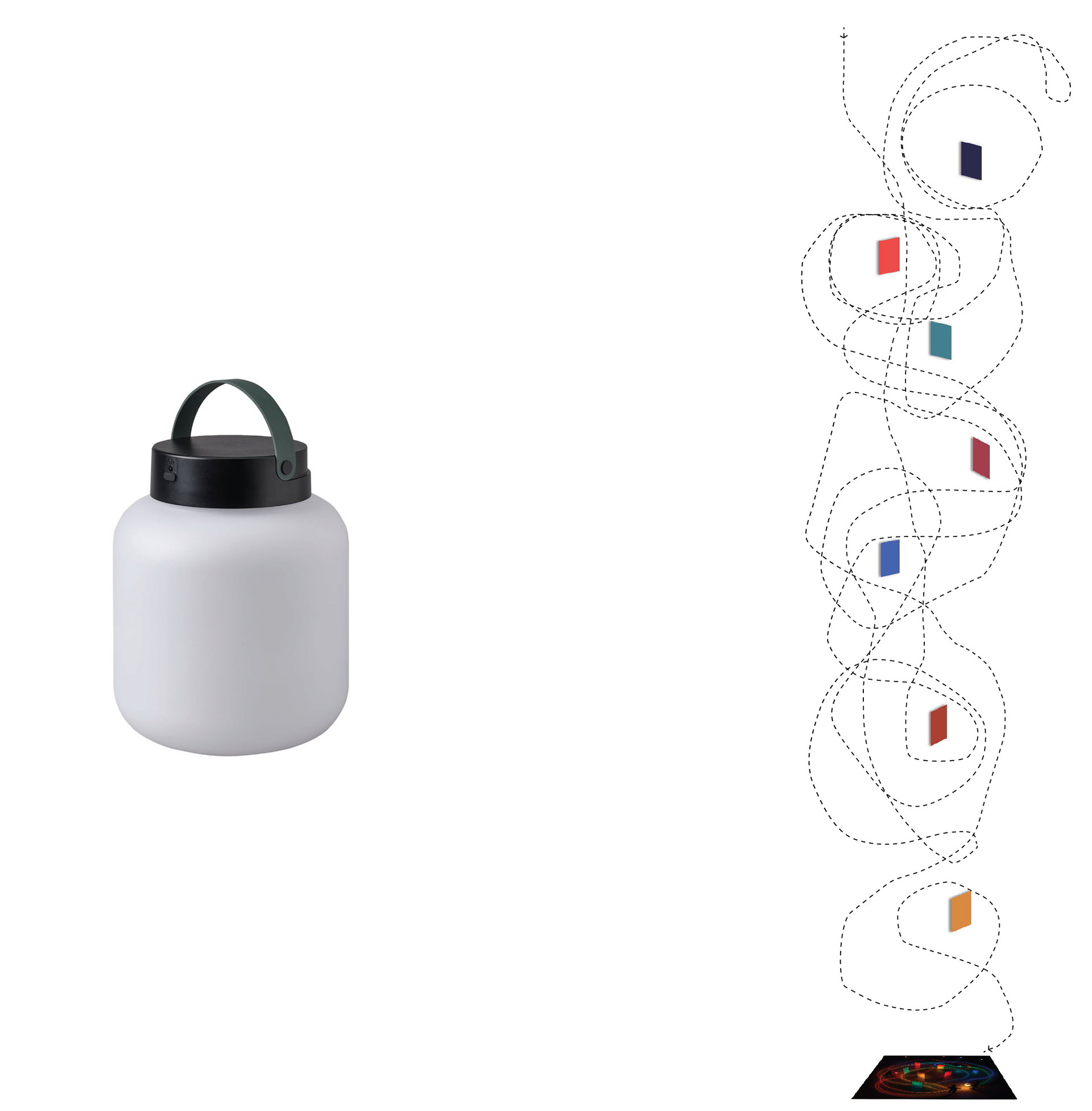
The space
A modular room of at least 5 × 5 m. Lightweight aluminium frames hold interchangeable panels: reflective, translucent, textured, matte. Each surface changes how light behaves. Infrared sensors split the room into zones, so reactive LEDs answer every movement.
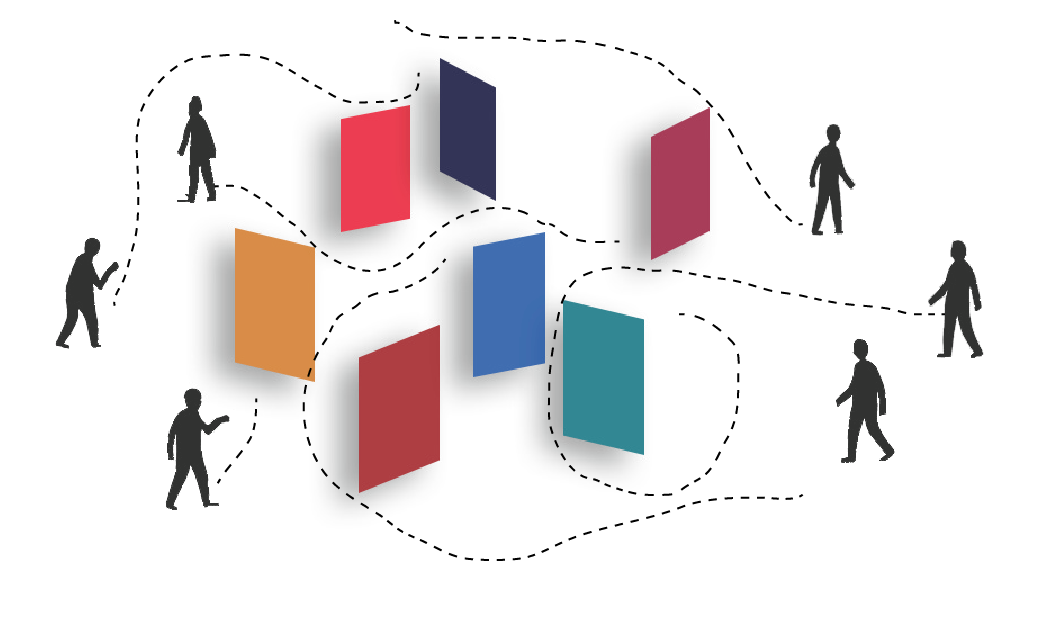
Can one perspective ever know the whole?
The book
The research and the design came together in a printed book: Illuminating the Unsaid. The Narrative Potential of Light in Exhibition Design.
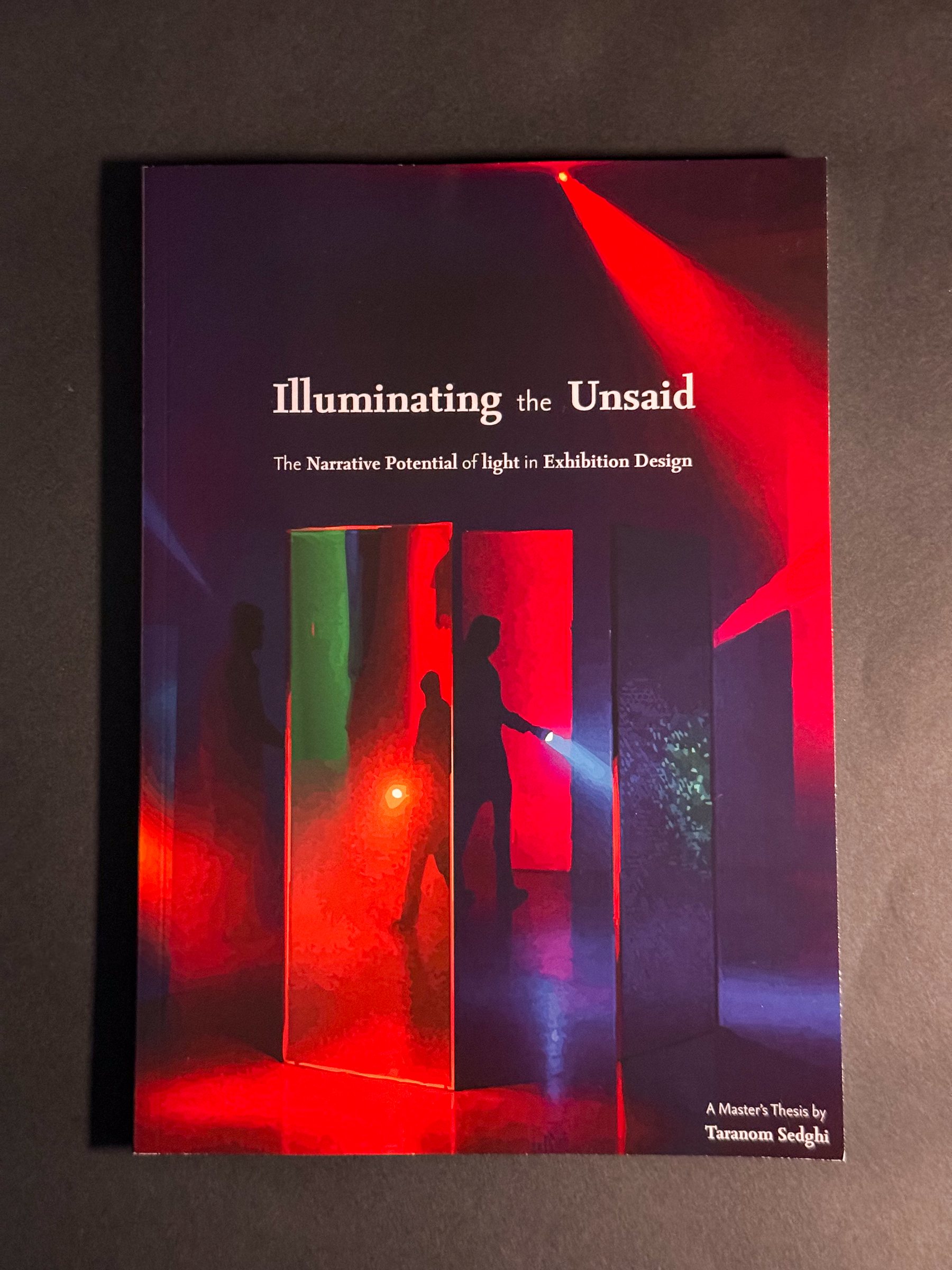
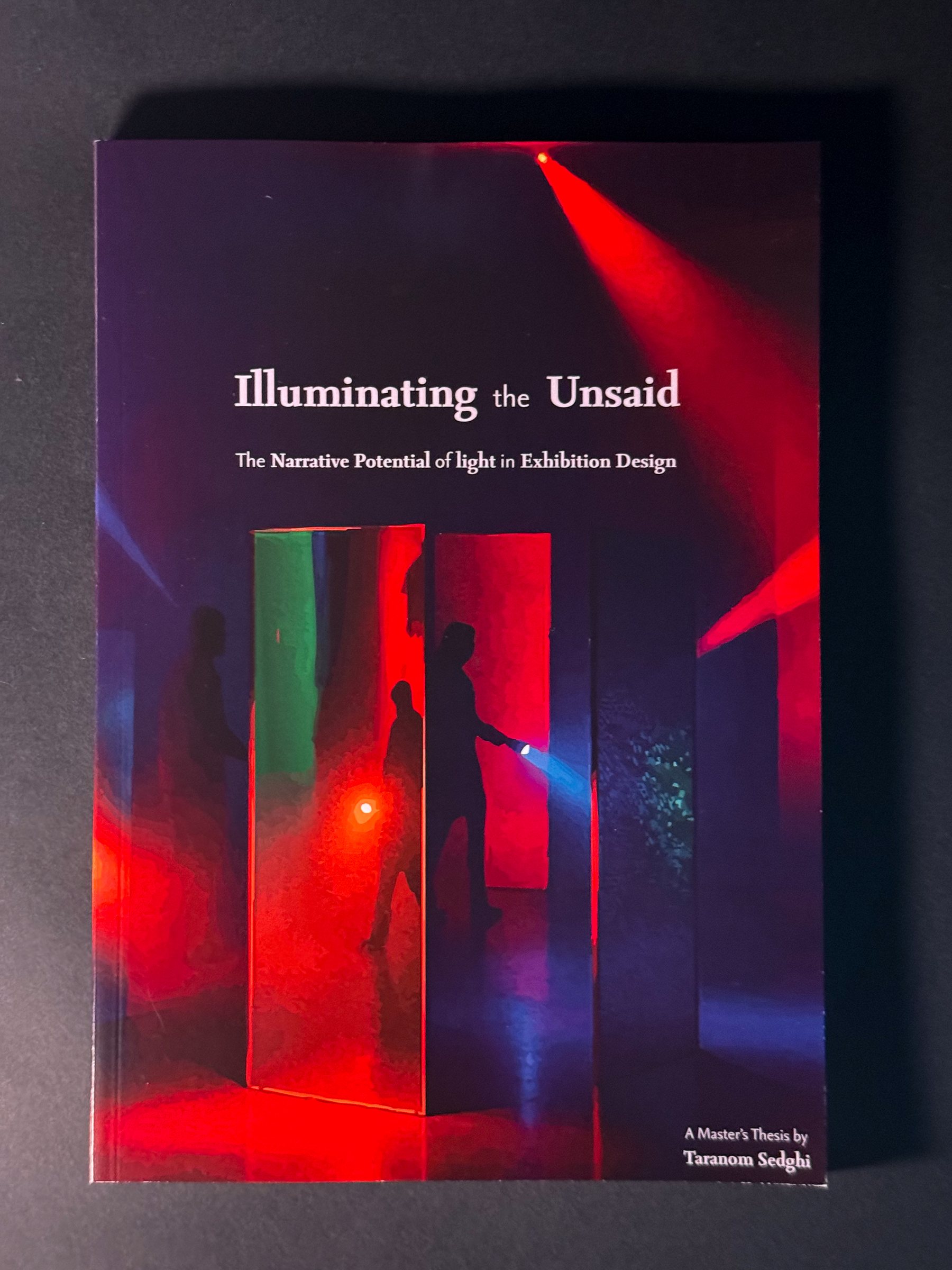
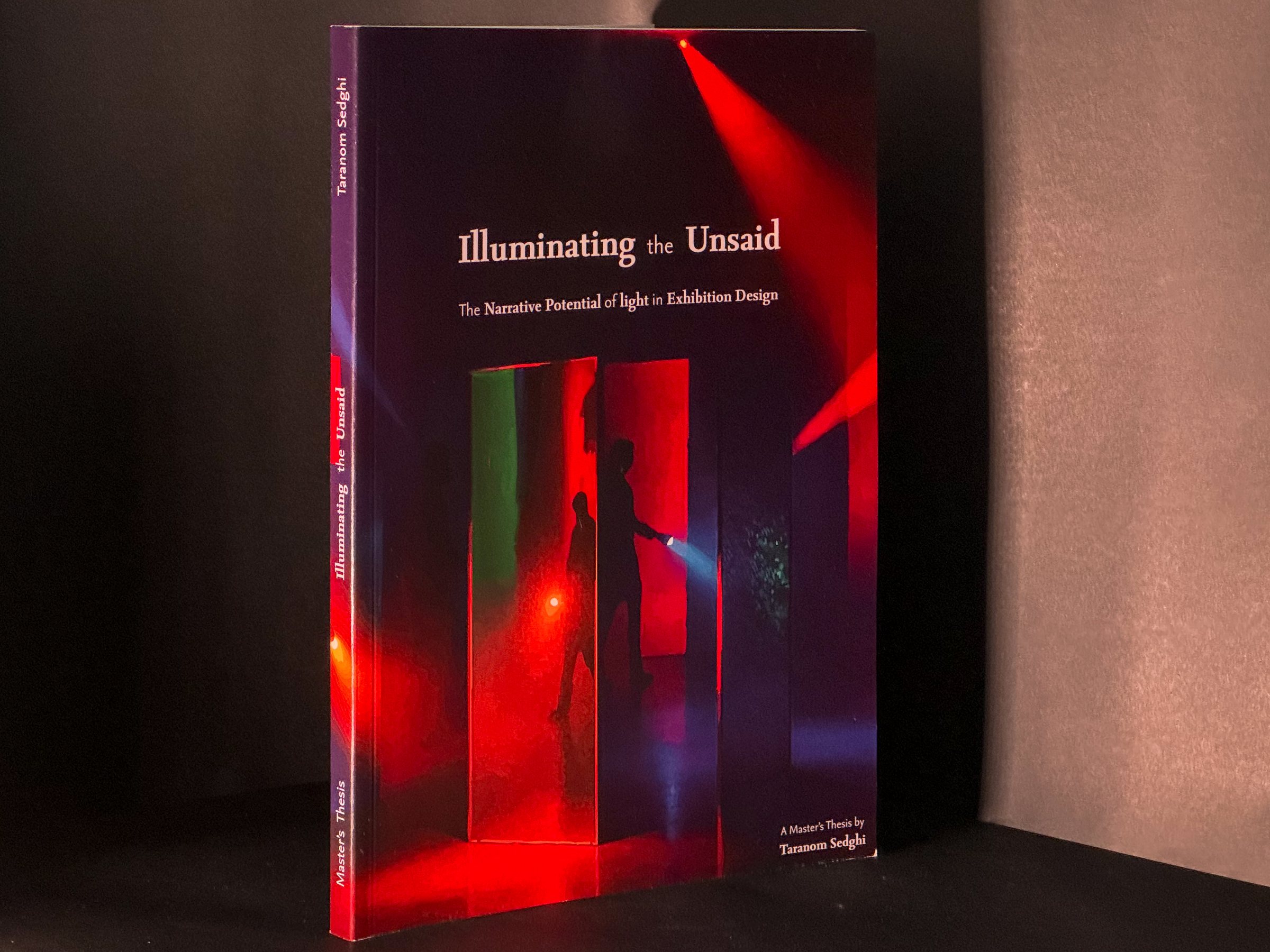
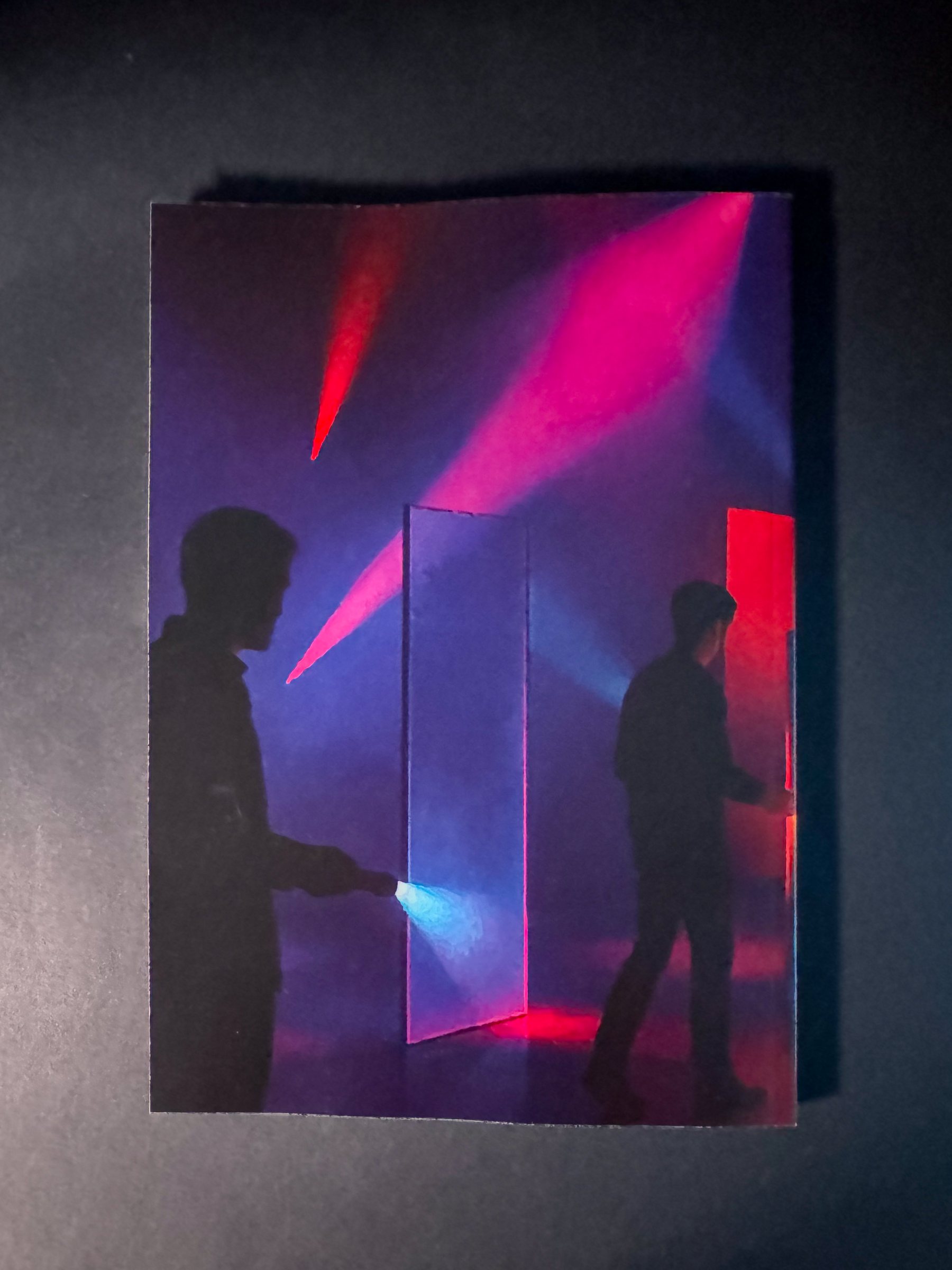
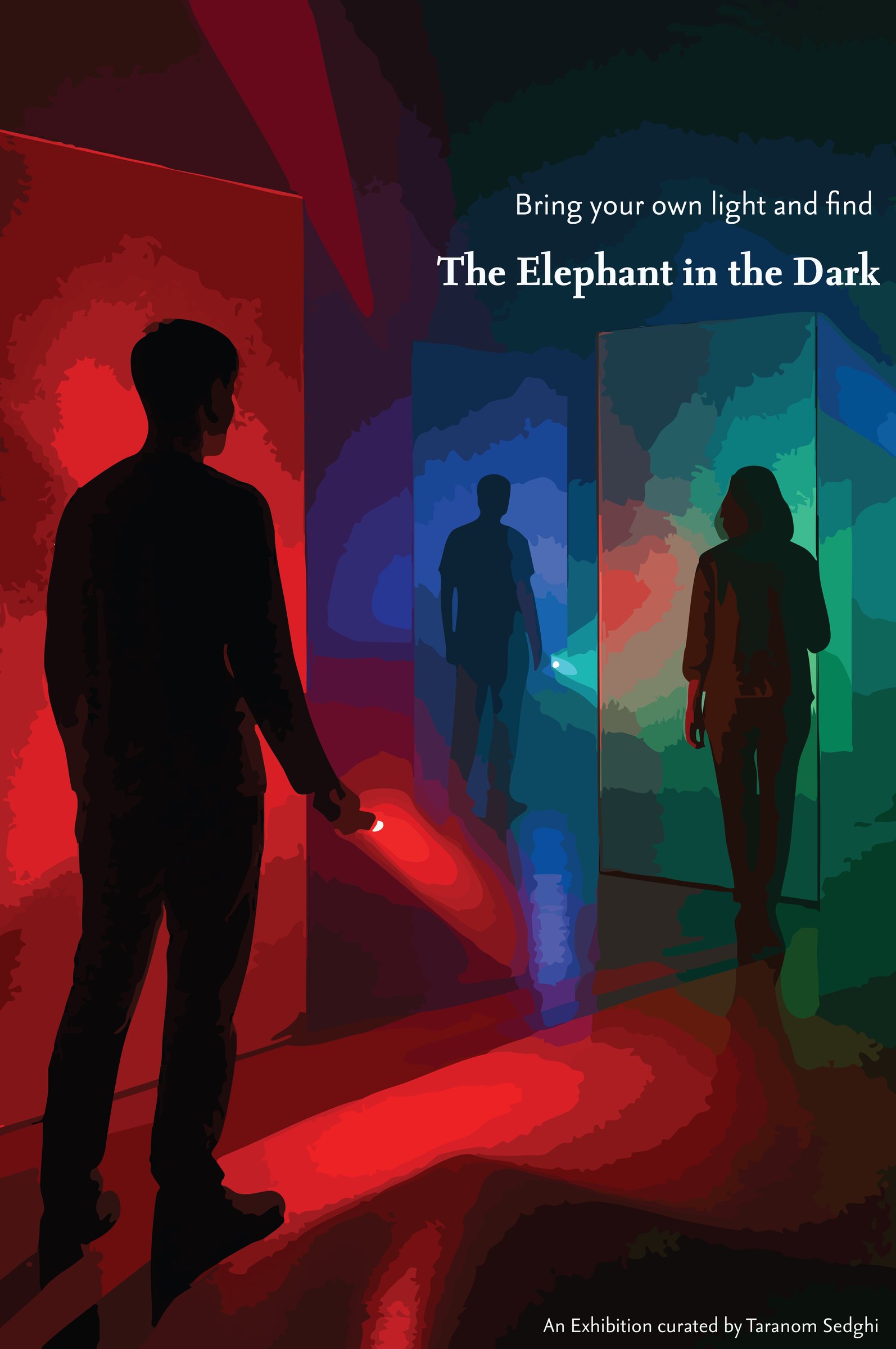
Book and exhibition poster: “Bring your own light and find The Elephant in the Dark.”
The idea grew out of a light experiment I ran first. See Storytelling with Light.